Ensuring that your baby maintains the proper head and spinal alignment is one of the most common concerns that every new parent has. While they’re in their car seat, it’s very easy for your baby’s head to fall forward or tilt at an angle that’s uncomfortable and potentially dangerous for your child’s neck.
In fact, car seats, swingers, infant carriers, and strollers are all places in which parents might find difficulty in keeping their child’s head in the proper place. With that being the case, what things can you do to make sure that your baby’s head remains properly positioned?
In this article, we’ll be exploring the importance of keeping your baby’s head in the proper position while they’re in their car seat and how to correctly position your child’s head.
In the end, I’ll provide a small list of recommendations for head supports and infant inserts that can be used to help your little one maintain proper head placement.
Why is it Important to Have the Right Head Position in a Car Seat?
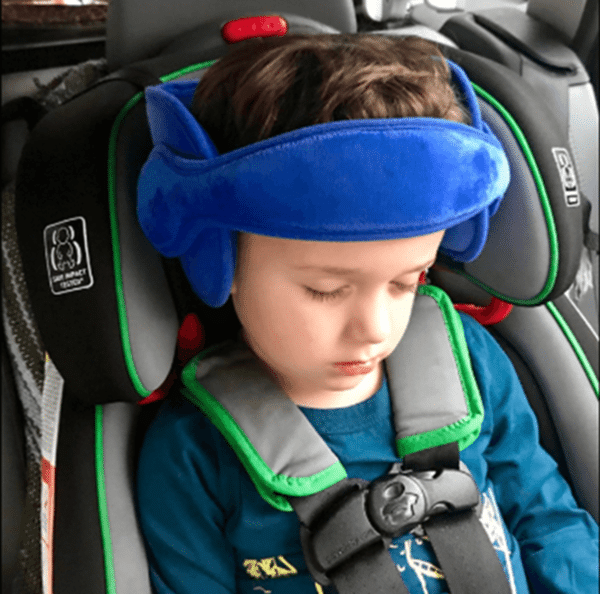
During the early stages of a child’s development, the ligaments and tendons in the neck are stretchable and hard to tear. For this reason, when your baby’s head tilts to the side, it’s not something that needs to be worried about. On the contrary, if your baby’s head flops forward while they’re in the car seat, that’s when adjustments should be made to ensure that it doesn’t happen again.
The airways in your baby’s throat are narrow, and when the head slumps forward, it can drastically constrict the airflow, making it very difficult for your baby to breathe freely. At such an early age, your baby has not yet reached the stage in their neurological development where their brain can register the lack of oxygen they’re receiving. So, their brain can’t send the messages it needs to make your baby correct their head placement.
Additionally, in proportion to their neck, your baby’s head is significantly bigger. If your baby’s head slumps forward, they may realize that they’re in the constricting position, but, due to gravity, they may not have the strength yet to lift their head to a better position. For these reasons, it’s very important to make sure that your baby can keep their head in the proper position while they’re in their car seat.
How to Safely Position Your Baby’s Head in Their Car Seat
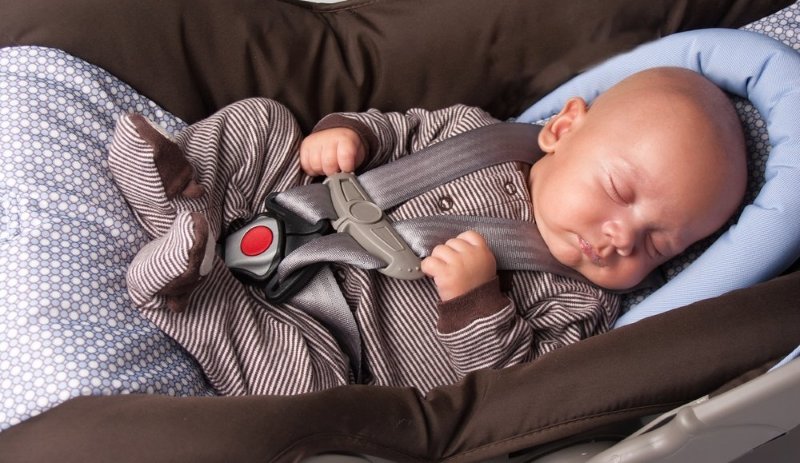
When some new parents see that their baby’s head is turned to the side, they panic and immediately rush out to buy infant inserts to “fix” the problem. As I mentioned earlier, this position is not harmful and is in fact, a natural thing that babies do to breathe freely. So, if you notice this in your baby, do not fret!
Now, if head slumping is a problem area for your baby, there are two things that you can do to prevent it from happening.
Maintaining a Safe Head Position - Recommended Products
Now, I don’t want to give you a list of third-party head supports I found because one, they’re not the best, and two, you should NOT use aftermarket products with your car seat, especially ones that deal with your child’s head and neck alignment unless you have the expressed permission of your car seat manufacturer. Instead, I’ll suggest tw0 products that I believe will help prevent head slumping. That way, you can check with your car seat manufacturer to see if they produce or have suggestions on how to keep your child’s head in a safe position.
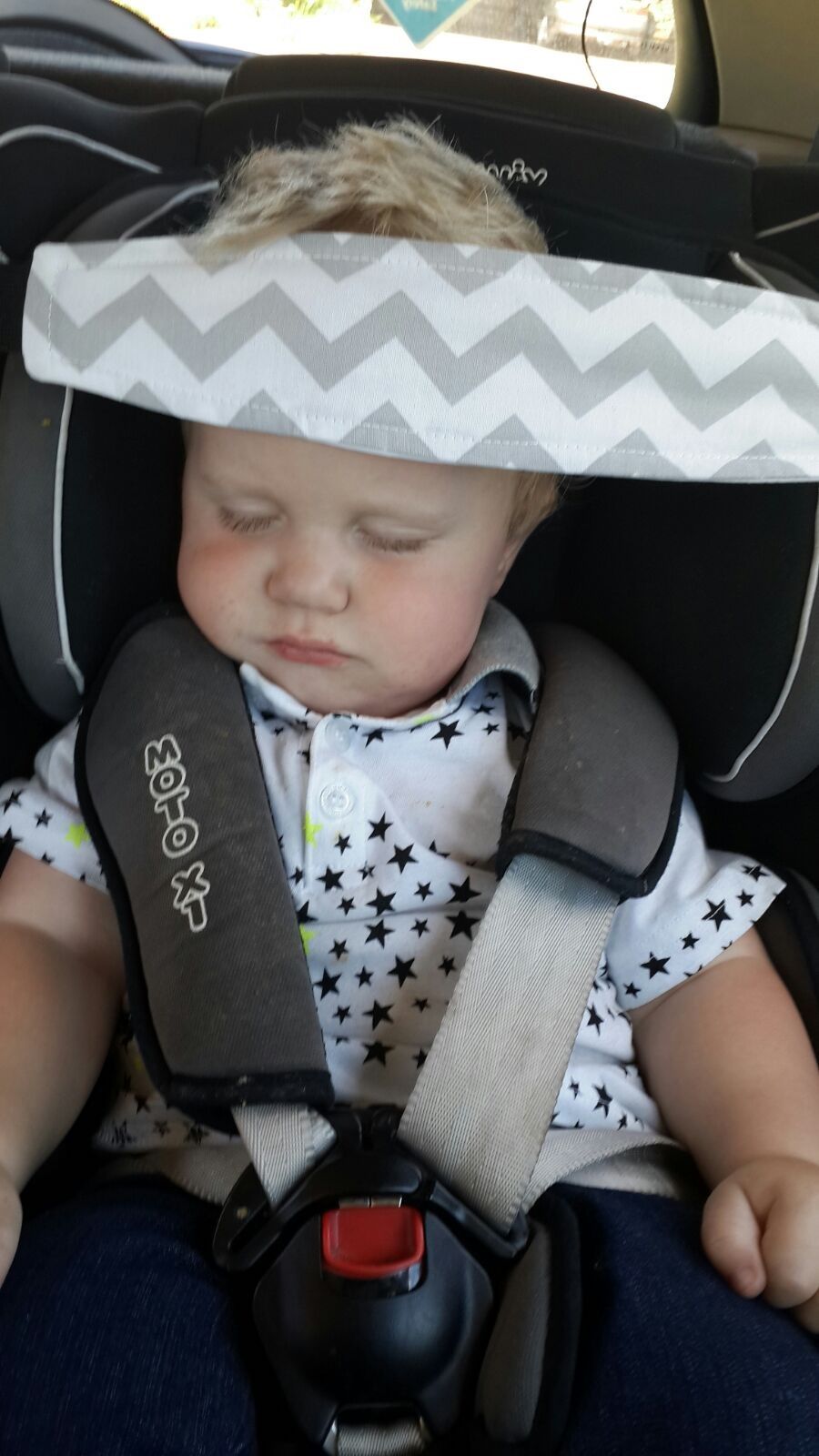
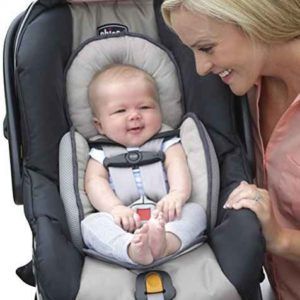
Are Infant Head Supports Putting Your Newborn Baby in Danger in the Car?
Conclusion
Making sure that your baby's head is properly supported is always one of the biggest concerns that new parents have. When riding in a car seat, it can be hard to keep your baby from letting their head fall forward, which can constrict their airways.
To combat this, make sure that your baby's car seat is properly reclined and that they're buckled in tightly and securely. You can also add accessories such as head straps and head and body support pillows to keep your child's head from falling forward.
Remember, if you don't have your car seat manufacturer's permission, then you should NOT use the accessory.

Growing up I was a carefree male going about life like there was no tomorrow. Naturally, I ‘grew’ up, settled down and started a family.
Going from an independent carefree male to a family man was somewhat of a U-turn and required a lot of learning. Luckily for me, my wife works in education and has always been the shining light always ahead of me on all factors kids related.
Initially, my wife didn’t have a driving license (luckily this has now changed and it does make life easier), and all things car related were my task. Child locks were the obvious starting point which lead me down a rabbit hole.
So far we have personally tested dozens of convertible car seats and have owned five despite neither of our kids having reached the age of 5! Simply put, a car seat can be great on paper, work great on trying out but can fail on you in real life.
This is why I have put together this website – to help inform and educate you!
Of course, as I mentioned above, at the end of the day your experience will be the best test so I’d love to hear your experiences and feedback in the comments.
To contact me personally, please do so through my contact page.
I look forward to hearing from you!
Peter
P.S. If you click a link on my site and end up buying a car seat on Amazon, I’ll get paid a small commission (or as the Amazon lawyers put it: “As an Amazon Associate I earn from qualifying purchases”)
My son is six months old. His car seat doesn’t has head support. Me and my wife is looking for detachable head support. Is it safe for kids?
No. you should not buy aftermarket products to use with your car seat. Also, you should find better resources for car seat information as the info on this page is not good. No manufacturer will let you use those strap across the forehead things. Your seat may allow you to roll up two receiving blankets on either side (not over the head), but you might not actually need it. Have your seat at the proper recline and you won’t have to worry about baby’s chin being to chest. Head over to the side is JUST FINE! =cpst
and while I assume you won’t post my previous comment or this one, for god’s sake PLEASE use better photos. The misuse in these is awful…even aside from the horrible aftermarket products 🙁
Head straps are not safe.
It can internally decapitate your child.
Head straps are very dangerous in the case of a car crash because the forward force would make the part of the head that isn’t restrained (the chin) to go forward while the forehead remains in place causing the head to tip backwards. Once they head slips free of the restraint, the head would whip forward once more, causing an even greater flexion of the spine and greater risk of spinal injury. PLEASE, don’t use these products.