Alabama Department of Public Health says that driving in Alabama means there is a 54.1% chance that you’ll encounter a car accident in your lifetime. If it happens when you’re driving with a child passenger, a crash-tested car seat is the most effective way to reduce serious injuries.
Alabama Car Seat Law:
The state of Alabama, through its Alabama Child Restraint Law, wants to make sure of your child’s safety in case of an accident. There is a fine of $25 for not abiding by this law. Alabama law states:
"Every person transporting a child in a motor vehicle operated on the roadways, streets, or highways of this state, shall provide for the protection of the child by properly using... a child passenger restraint system."
According to the law, a “child” is a person younger than 9 years.
Alabama Rear-facing Car Seat Law
According to Alabama Law, “Infant-only seats and convertible seats used in the rear-facing position for infants until at least one year of age or 20 pounds.”
Alabama Forward-facing Car Seat Law
When the child gets older and outgrows the rear-facing safety seat, they will use a forward-facing seat with a harness. By law, the age limit until you have to use a forward-facing car seat is at least 5, and the weight limit is 40 pounds.
Child Booster Seat Laws in Alabama
Alabama law reads that “Booster seats (will be used) until the child is six years of age”. Experts, on the other hand, do not suggest this. Booster seats can be used until the child reaches the age of fifteen. Booster seats are a safer alternative to seat belts if your youngster is less than 4'9" tall or weighs less than 40 pounds.
When Can My Child Sit in the Front Seat in Alabama?
Alabama law doesn’t give a specific age when your child can sit in the front seat. However, it does say that you can’t put a rear-facing seat in the front. Experts say that after 13 years of age, children can use car seat belts. A car seat belt is safe when the lap belt lays across the upper thighs and the shoulder belt fits across the chest. After that, your child is ready to sit in the front seat.
Leaving Child in Car Law in Alabama
Alabama state law says:
“No person shall leave a child or an incapacitated person in a motor vehicle unattended in a manner that creates an unreasonable risk of injury or harm to the child or incapacitated person. A vehicle that has an ambient interior temperature of 99 degrees Fahrenheit or less shall be presumed safe.”
Is it Illegal to Smoke in a Car with a Child in Alabama?
Alabama wants to make it illegal and $100 fine for smoking in a vehicle in the presence of a child under 19 years of age. A bill was passed last year but couldn’t go through the senate. Now lawmakers are trying to push this bill again. (Source)
Taxi Car Seat Law in Alabama
Alabama is 1 of 35 states that exempt taxis from child restraint system laws. According to the law:
“Every person transporting a child shall be responsible for assuring that each child is properly restrained pursuant to this section. The provisions shall not apply to taxis and all motor vehicles with a seating capacity of 11 or more passengers.”
Alabama Law Car Seat - Replacement After Accident
In Alabama, it’s not against the law to use car seats that have been in an accident. National Highway Traffic Safety Administration recommends that if you were in a minor crash, you can use the car seat again. You can refer to this resource to understand what a minor crash is.
Places to Get Car Seat Help in Alabama
Here are some resources that can help you with the car seat inspection and provide you further help.
Good Car Seat Safety Videos for Alabamans
Children's of Alabama Car Seat Safety
Children's of Alabama Kids and Car Seats
Alabama Yellow Dot Program & Child Car Seat Check
Resources for More Info on Alabama Car Seat Safety

Growing up I was a carefree male going about life like there was no tomorrow. Naturally, I ‘grew’ up, settled down and started a family.
Going from an independent carefree male to a family man was somewhat of a U-turn and required a lot of learning. Luckily for me, my wife works in education and has always been the shining light always ahead of me on all factors kids related.
Initially, my wife didn’t have a driving license (luckily this has now changed and it does make life easier), and all things car related were my task. Child locks were the obvious starting point which lead me down a rabbit hole.
So far we have personally tested dozens of convertible car seats and have owned five despite neither of our kids having reached the age of 5! Simply put, a car seat can be great on paper, work great on trying out but can fail on you in real life.
This is why I have put together this website – to help inform and educate you!
Of course, as I mentioned above, at the end of the day your experience will be the best test so I’d love to hear your experiences and feedback in the comments.
To contact me personally, please do so through my contact page.
I look forward to hearing from you!
Peter
P.S. If you click a link on my site and end up buying a car seat on Amazon, I’ll get paid a small commission (or as the Amazon lawyers put it: “As an Amazon Associate I earn from qualifying purchases”)
I think the $25.00 law is not enough for this law. I also think that any person caring for an infant or child has a responsibility to make sure that a car seat should be installed correctly by themselves .The person should be required to go through a class. If they present themselves as responsible parents or caregivers they should want to know about every aspect and detail of the safety device for that infant or child
Thanks for your opinion, Barry!
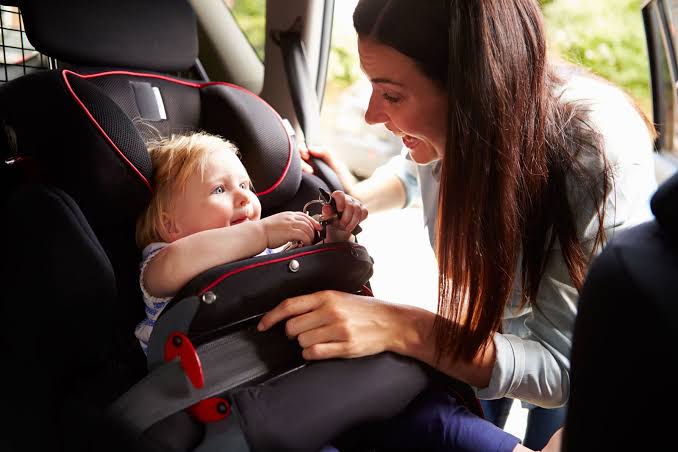
The second photo of mom with a definitely under-two child in forward facing carseat should perhaps be replaced with one of this age-group in a rear-facing seat. BTW, my son and DIL had to move their 99th percentile in height and weight kids to forward facing considerably before age two. And likely will again, for this third. There’s only so much origami-folding a baby will tolerate.
“There’s only so much origami-folding a baby will tolerate.”
Lol – good one!
Your article is quite helpful! I have so many questions, and you have answered many. Thank you! Such a nice and superb article, we have been looking for this information about Alabama car seat laws Great post…