Did you know that Iowa has the fourth-highest child car crash fatality rate in the US? And that, according to the Centers for Disease Control and Prevention, in 2013 vehicle-related accidents costed Iowa almost $400 million?
The best way to prevent the loss of precious lives is through better understating of traffic laws. Luckily, there are many places you can look for instructions on how to keep your child safe on the road. In this comprehensive article we cover laws and tips for road safety to keep your little ones safe.
Iowa Car Seat Law
“A child under one year of age and weighing less than twenty pounds who is being transported in a motor vehicle subject to registration, except a school bus or motorcycle, shall be secured during transit in a rear-facing child restraint system that is used in accordance with the manufacturer’s instructions.”
Iowa Rear-facing Car Seat Law
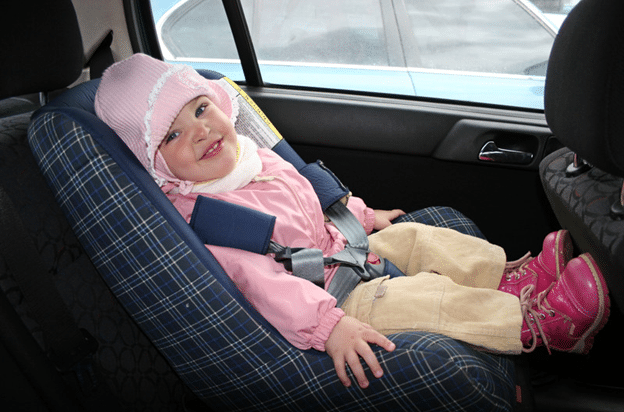
Children under the age of 12 months and 20 pounds must be secured in a rear-facing car seat. The rear-facing car seat should be placed in the back seat of the car.
Iowa Forward-facing Car Seat Law
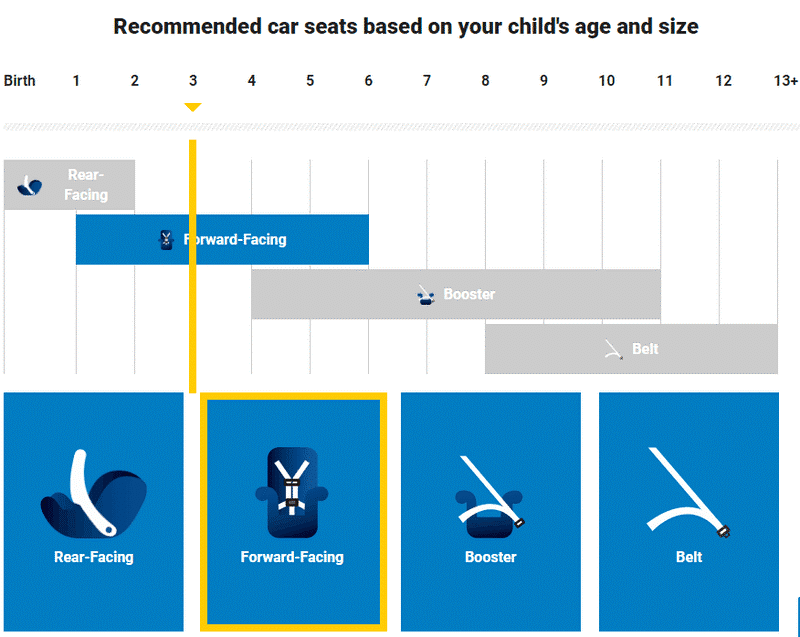
After exceeding the safety limit of the rear-facing car seat, you should secure your child in the forward-facing seat. Please refer to the seat manufacturer’s guideline for using the forward-facing seat. Experts recommend that you use a forward-facing seat until the age of 4.
Child Booster Seat Laws in Iowa
Iowa law doesn’t specifically mention booster car seats or the age until you should use the booster car seat. Experts recommend that you focus on weight and height of the seat limit. Keep using the booster seat until your child is within the height and weight limit mentioned by the car seat manufacturer is considered a safe practice. Captain Scott of Dubuque Police Department put it like this “I often tell people to focus more on the height/weight parameters of the seat (versus the child's age, since children grow at varying rates)”
When Can My Child Sit in the Front Seat in Iowa?
It is recommended that you consider having your child in the front seat safe after the age of 12. Although, using the back seat for as long as possible is a good idea.
Leaving Child in Car Law in Iowa
Iowa doesn’t have specific laws that deal with leaving children alone in the cars. While Iowa don't have a specific law for that particular act - they do have a child endangerment law that would likely apply (or more serious laws that could apply depending on whether injury or death occur).
Is it Illegal to Smoke in a Car with a Child in Iowa?
It is not illegal in Iowa to smoke in a car with child passengers.
Taxi Car Seat Law in Iowa
Taxis are not in charge of enforcing the law. Instead, it is the parents' job. According to Iowa law, the guardian or parents will be held liable for the taxi driver's negligence rather than the taxi driver. To put it another way, cabs are not exempt from car seat regulations.
Places to Get Car Seat Help Near Me
Good Car Seat Safety Videos
Blank Children's Hospital Car Seat Safety
The Children's Hospital of Philadelphia’s Booster Seat Safety
American Automobile Association: When a Child Can Move Out of a Booster Seat
How to secure your car seat by Safe Kids Worldwide
Cincinnati Children's How to Install a Car Seat
Resources for More Info

Growing up I was a carefree male going about life like there was no tomorrow. Naturally, I ‘grew’ up, settled down and started a family.
Going from an independent carefree male to a family man was somewhat of a U-turn and required a lot of learning. Luckily for me, my wife works in education and has always been the shining light always ahead of me on all factors kids related.
Initially, my wife didn’t have a driving license (luckily this has now changed and it does make life easier), and all things car related were my task. Child locks were the obvious starting point which lead me down a rabbit hole.
So far we have personally tested dozens of convertible car seats and have owned five despite neither of our kids having reached the age of 5! Simply put, a car seat can be great on paper, work great on trying out but can fail on you in real life.
This is why I have put together this website – to help inform and educate you!
Of course, as I mentioned above, at the end of the day your experience will be the best test so I’d love to hear your experiences and feedback in the comments.
To contact me personally, please do so through my contact page.
I look forward to hearing from you!
Peter
P.S. If you click a link on my site and end up buying a car seat on Amazon, I’ll get paid a small commission (or as the Amazon lawyers put it: “As an Amazon Associate I earn from qualifying purchases”)
Leave a Reply