Our Top Recommendations
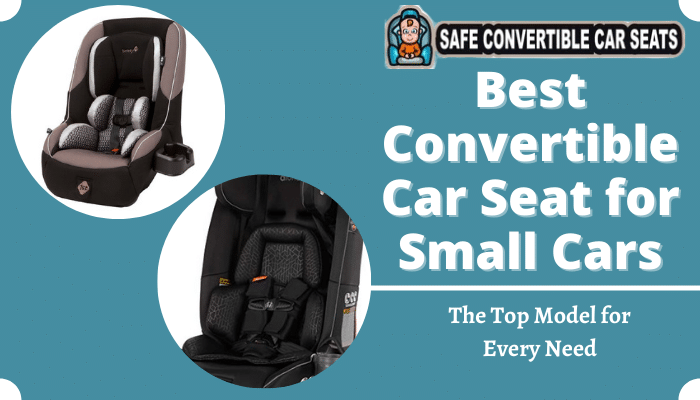
Finding the best convertible car seat for small cars can be confusing and hard, because there are so many brands and models to evaluate, and not every car seat can comfortably fit in a small car.
But not to worry! We've done the research for you and narrowed done these top picks:
- Best overall convertible car seat for small cars: Diono Radian 3RXT
- Best budget convertible car seat for small cars: Safety 1st Guide 65
- Best convertible car seat for travel for small cars: Diono Radian 2AX
- Best convertible slim car seat for small cars: Safety 1st Continuum
- Best Graco convertible car seat for small cars: Graco My Ride 65
In this article we also cover a few helpful tips to keep in mind when searching for a convertible car seat.
By the end of this article, you'll have the information you need to pick the perfect car seat for your small vehicle – and your little bundle of joy!
Let's jump in!
At a Glance: Best Convertible Car Seat for Small Cars
Image | Name | Length | Width | Height | Weight | Best For | Header |
|---|---|---|---|---|---|---|---|
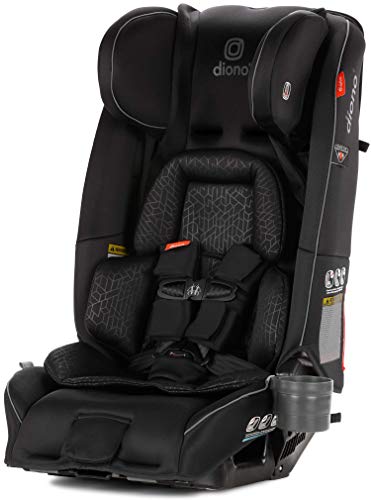
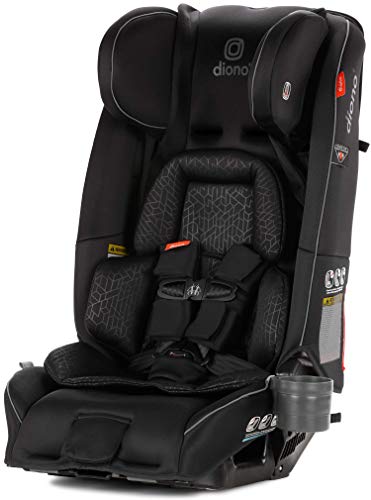
| Diono Radian 3RXT | 16.14" | 16.93" | 28.35” | 28.1 lbs | Perfect for traveling | |
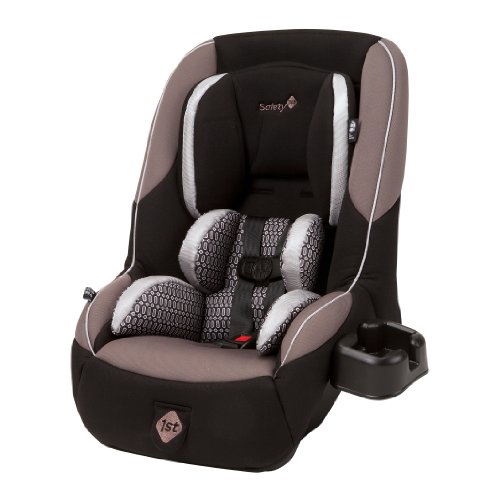
| Safety 1st Guide 65 | 20.2” | 18.5" | 27.2” | 15 lbs | Budget-friendly | |

| Diono Rainier 2AX | 15.65" | 17.75" | 28.25" | 27.6 lbs | Luxury & Comfort | |

| Safety 1st Continuum | 24" | 19" | 23.8" | 6.35 kg | Compact Design | |

| Graco My Ride 65 | 33.8" | 20.6" | 17" | 19.56 lbs | Rigorously Crash Tested |
Top Picks
Best Convertible Car Seat for Small Cars (Overall)
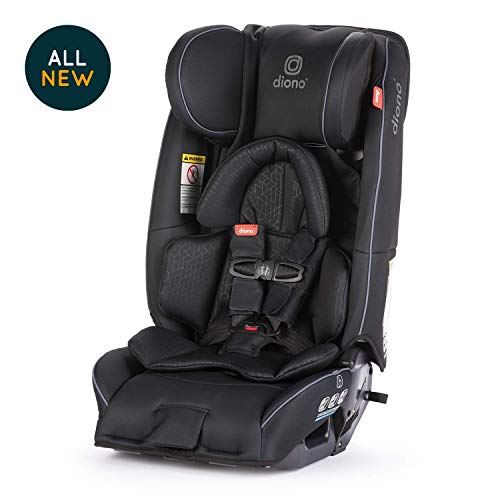
diono radian 3rxt | |
|---|---|
Length | 16.14" |
Width | 16.93" |
Height | 28.35” |
Weight | 28.1 lbs |
The Bottom Line:
The Radian 3XRT is a stylish, compact convertible car seat that grows as your child does. Some pros about this model include its ability to fit-3-across. It opens up so much room in the back seat that your other passengers can ride comfortably with plenty of room to breathe. Also, the Radian 3XRT is perfect for traveling with its foldable frame and lightweight design. It’s certified for airplane use, so it’s built to be easy to carry around in a crowded place like the airport.
The downside? The Radian 3XRT no longer comes with a ratcheting system to make tightening the harness easier. It’s also one of the more expensive models in the market, and unlike other modern models, the harness needs to be rethreaded to change its position.
For help with installation, you can check out this example video created by the manufacturer.
You can also find a copy of the Radian 3XRT instruction manual here.
Diono Radian 3RXT Safety Ratings
The safety ratings provided by the NHTSA are as follows:
As an extra measure of safety, the Diono Radian 3XRT is equipped with memory and EPS absorbing foam, as well as additional layers of side impact protection. The Radian 3XRT is also outfitted with a steel alloy frame and reinforced aluminum sidewalls to give your child the safest ride possible.
Diono Radian 3RXT Ease of Installation
The Radian 3XRT’s measurements are listed below:
The Radian 3XRT has a 12-position headrest and 5 harness positions so that your child remains comfortable as they grow and get bigger. To make tightening the harness easier, the Radian 3XRT also comes with a harness adjuster strap located at the front of the car seat.
With machine-washable fabrics, the Radian 3XRT is quick and very easy to clean.
Diono Radian 3RXT Longevity
Rear-facing
Forward-facing
Booster
Diono Radian 3RXT Ease of Use
The Radian 3XRT is equipped with an Easy Click SuperLATCH system to make installation super quick. It’s important to read both your vehicle and product manual to see if your vehicle has the type of seatbelt that’s compatible with your car seat.
If you don’t mind doing a little more work, the Radian 3XRT is perfect, because its harness must be rethreaded to change the position. It’s not a hard thing to do - it just takes a little more time.
Diono Radian 3RXT Comfort & Quality
The Radian 3XRT has an adequate amount of padding that provides the perfect mixture of safety and comfort for your little one. It also includes an infant insert pillow and additional padding in the headrest to sprinkle a little extra on the comfort and safety level.
To top it off, the plush-knit, easy-to-remove fabric is breathable which ensures that your child has a smooth ride that’s cool and relaxing.
Best Budget Convertible Car Seat for Small Cars
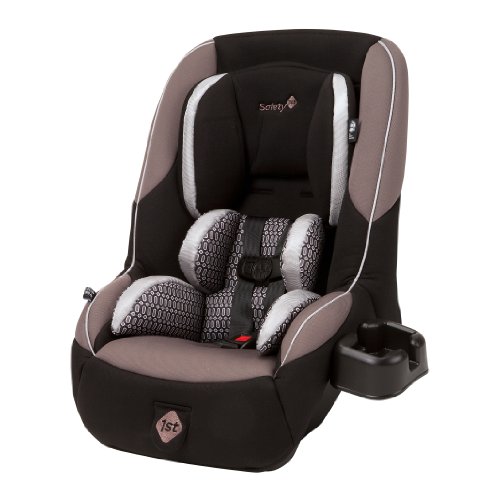
safety 1st guide 65 | |
|---|---|
Length | 20.2" |
Width | 18.5" |
Height | 27.2” |
Weight | 15 lbs |
The Bottom Line:
The Safety 1st Guide 65 is an easy-to-use, compact car seat that’s sleek enough to fit 3 across. It’s also extremely lightweight, and it doesn’t come with the hassle of rethreading the harness every time you need to change its position.
On the contrary, it can be hard to tighten the harness. It also only has 1 recline angle, which can make installation a little awkward and hard to do.
Here’s a helpful example video that demonstrates how to properly install a Safety 1st Guide 65 convertible car seat.
You can also find a copy of the Guide 65 instruction manual here.
Safety 1st Guide 65 Safety Ratings
Unfortunately, the NHTSA doesn’t have safety ratings for the Safety 1st Guide 65.
The Guide 65 contains an adjustable multi-position headrest that’s fitted with extra padding for maximum side impact protection. As an added measure of safety, the Guide 65 is also designed with energy-absorbing foam, and it has anti-rebound bolsters so that you can add an anti-rebound bar to minimize the impact force of a car crash.
Safety 1st Guide 65 Ease of Installation
The Guide 65 measurements are listed below.
The Guide 65 is equipped with a 5-point adjustable harness and an upfront harness adjust to make tightening the harness an effortless task. Speaking of effortless tasks, the Safety 1st Guide 65 is dressed in a machine-washable seat cover to make clean-up quick and easy.
Safety 1st Guide 65 Longevity
Rear-facing
Forward-facing
Safety 1st Guide 65 Ease of Use
The Safety 1st Guide 65 convertible car seat is equipped with a LATCH system. You should refer to your vehicle and product manuals to determine if your car has a seatbelt that’s compatible with your car seat.
Additionally, the Guide 65 does NOT have a rethread harness, meaning you’re spending less time trying to tighten your child’s harness and more time on the road.
Safety 1st Guide 65 Comfort & Quality
The Safety 1st Guide 65 is created with an adequate amount of padding to provide a comfortable and safe ride for your little one. Its headrest is outfitted with extra layers of padding to give your child’s head and neck the proper support. Also, the Guide 65 has an infant insert pillow and soft, breathable fabric that makes every ride pleasant and cozy.
Best Convertible Car Seat for Travel for Small Cars
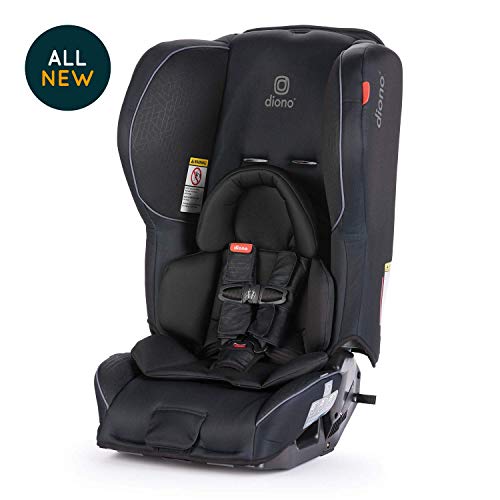
diono rainier 2ax | |
|---|---|
Length | 15.65" |
Width | 17.75" |
Height | 28.25” |
Weight | 27.6 lbs |
The Bottom Line:
There are many amazing pros that are packaged with the Rainier 2AX including a foldable frame for easy storage and travel, extended rear-facing use (recommended by several child passenger safety organizations), and its ability to fit-3-across.
The downside? The plush-knit fabric on the Rainier 2AX isn’t very breathable, so your child may find themselves feeling a bit toasty or cramped.
For easy installation tips, this short video will show you an example of how to efficiently install your Rainier 2AX.
You can also find a copy of the instruction manual located here.
Diono Rainier 2AX Safety Ratings
The safety ratings provided by the NHTSA are as follows:
The extra-deep sidewalls found in the Rainier 2AX provide enhanced layers of side impact protection for your child. It’s also equipped with energy-absorbing foam and a steel frame with extra-deep, reinforced aluminum sides that work together to create the ultimate level of security.
Diono Rainier 2AX Ease of Installation
The Rainier 2AX measurements are listed below.
The Diono Rainier 2AX is equipped with a SafeStop energy-absorbing harness that has 5 harness positions and 3 buckle positions so that it can easily adjust to your child’s growing body. Additionally, the Rainier 2AX is fitted with a machine-washable seat cover to make clean-up a breeze.
Diono Rainier 2AX Longevity
Rear-facing
Forward-facing
Diono Rainier 2AX Ease of Use
The Rainier 2AX contains an Easy Click SuperLATCH system to make installation as easy as 1,2,3. It also has a visual locking indicator to ensure that your child is seated securely in their car seat. This car seat is also designed for seatbelt installation, but it’s important to read your vehicle and product manuals to make sure you have the proper car seatbelt for your child’s car seat.
Additionally, the harness system on the Rainier 2AX car seat does NOT contain a re-threadable harness, so you don’t have to go through the hassle of unthreading your harness every single time you need to change its position.
Diono Rainier 2AX Comfort & Quality
The Rainier 2AX contains adequate levels of padding throughout the car seat to make every car ride pleasant and comfortable for your little one. It’s also equipped with an infant insert pillow to provide an extra layer of comfort.
Best Convertible Slim Car Seat for Small Cars
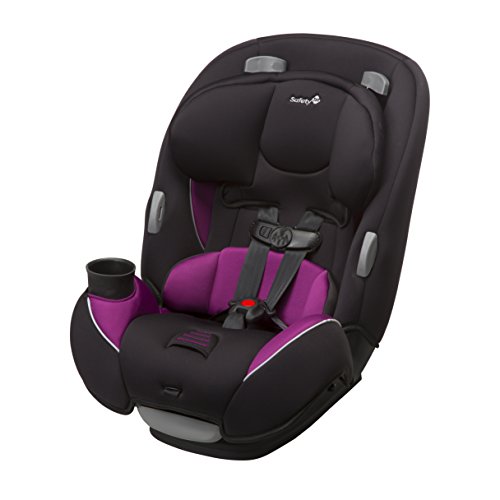
safety 1st continuum | |
|---|---|
Length | 24" |
Width | 19" |
Height | 23.8” |
Weight | 6.35 kg |
The Bottom Line:
The Safety 1st Continuum 3-in-1 car seat is equipped with many premium features including 3 recline angles and a compact design that frees up to 7 inches of legroom for the front seat. Also, you get both of these features and more at an affordable price.
On the contrary, you can’t use the LATCH system in booster mode, and your child will probably quickly outgrow their car seat, meaning it won’t be the last car seat that your child uses.
If you need help installing your Continuum 3-in-1, this helpful example video will demonstrate how to properly install your car seat.
Also, you can find a copy of the instruction manual here.
Safety 1st Continuum Safety Ratings
The safety ratings provided by the NHTSA are as follows:
The Safety 1st Continuum 3-in-1 does have side impact protection to provide an extra layer of support and security for your child’s head and neck. Unlike the other models we’ve reviewed, it doesn’t contain a steel frame or energy-absorbing foam or base.
Safety 1st Continuum Ease of Installation
The Continuum 3-in-1 measurements are listed below.
The Continuum 3-in-1 is equipped with a QuickFit harness that allows you to adjust both the harness and headrest in one simple step. It’s also fitted with a machine-washable seat cover to make clean-up just as easy as adjusting the harness.
Safety 1st Continuum Longevity
Rear-facing
Forward-facing
Booster
Safety 1st Continuum Ease of Use
The Continuum 3-in-1 car seat is equipped with a LATCH system to make installation easy and secure. It’s also compatible with seatbelt installation and contains a no-rethread harness that saves you time when adjusting your child’s harness height position.
Safety 1st Continuum Comfort & Quality
The Continuum 3-in-1 contains a decent amount of padding throughout the car seat to make your child’s experience enjoyable and cozy.
Best Graco Convertible Car Seat for Small Cars
graco my ride 65 | |
|---|---|
Length | 33.8" |
Width | 20.6" |
Height | 17” |
Weight | 19.56 lbs |
The Bottom Line:
The Graco My Ride 65 convertible car seat is easy to use/install, and it has an integrated LATCH system to make installation as easy as 1,2,3. It’s also equipped with removable cup holders for quick and easy clean-up time.
On the contrary, the My Ride 65 is a bit bulky and takes up a lot of room in the back seat. However, it’s still a good fit if you have a large vehicle or a small one.
If you need help installing your My Ride 65, this short video will teach you how to properly install your car seat.
You can also find installation instructions found in the instruction manual located here
Graco My Ride 65 Safety Ratings
The safety ratings provided by the NHTSA are as follows:
The My Ride 65 has side impact protection, and it’s side-impact tested to ensure that the car seat exceeds the safety standards set by car seat safety regulators. It’s also equipped with energy-absorbing foam to manage the impact force caused by a car crash. It does NOT have a steel frame.
Graco My Ride 65 Ease of Installation
The My Ride 65 measurements are listed below.
The My Ride 65 is equipped with an adjustable 5-point harness with upfront harness adjust to make securing your little one in their car seat simple and easy. It’s also outfitted with a machine-washable cover that makes clean-up just as easy as adjusting the harness.
Graco My Ride 65 Longevity
Rear-facing
Forward-facing
Graco My Ride 65 Ease of Use
The My Ride 65 is LATCH equipped and contains an easy-to-read level indicator to ensure that you’re installing your car seat securely and correctly. Unlike the models that we’ve previously reviewed, it’s not compatible with seatbelt installation. Additionally, the My Ride 65 does require that you rethread the harness if you need to adjust its harness position.
Graco My Ride 65 Comfort & Quality
As an extra measure of comfort and coziness, the My Ride 65 comes equipped with an infant insert pillow.
What to Look for in a Convertible Car Seat for Small Cars
Choosing a convertible car seat is not an easy thing to do - especially if you have a small car. You’ll find that not every car seat will comfortably sit in your back seat. With so many brands and models out there, how do you choose the perfect car seat for your child AND your car? Well, here are a few things you should look out for.
How we fit three car seats in one backseat
5 Best Convertible Car Seat for Small Cars Review
Conclusion
We’ve reviewed some of the best convertible car seat models for small cars, and we’ve discussed a few things you should keep an eye out for when you’re shopping for car seats.
I hope this article has given you a good idea about the types of convertible car seats that are perfect for your smaller vehicle. Remember, get your car seat inspected to guarantee that your child is riding in the safest seat possible!

Growing up I was a carefree male going about life like there was no tomorrow. Naturally, I ‘grew’ up, settled down and started a family.
Going from an independent carefree male to a family man was somewhat of a U-turn and required a lot of learning. Luckily for me, my wife works in education and has always been the shining light always ahead of me on all factors kids related.
Initially, my wife didn’t have a driving license (luckily this has now changed and it does make life easier), and all things car related were my task. Child locks were the obvious starting point which lead me down a rabbit hole.
So far we have personally tested dozens of convertible car seats and have owned five despite neither of our kids having reached the age of 5! Simply put, a car seat can be great on paper, work great on trying out but can fail on you in real life.
This is why I have put together this website – to help inform and educate you!
Of course, as I mentioned above, at the end of the day your experience will be the best test so I’d love to hear your experiences and feedback in the comments.
To contact me personally, please do so through my contact page.
I look forward to hearing from you!
Peter
P.S. If you click a link on my site and end up buying a car seat on Amazon, I’ll get paid a small commission (or as the Amazon lawyers put it: “As an Amazon Associate I earn from qualifying purchases”)
Leave a Reply