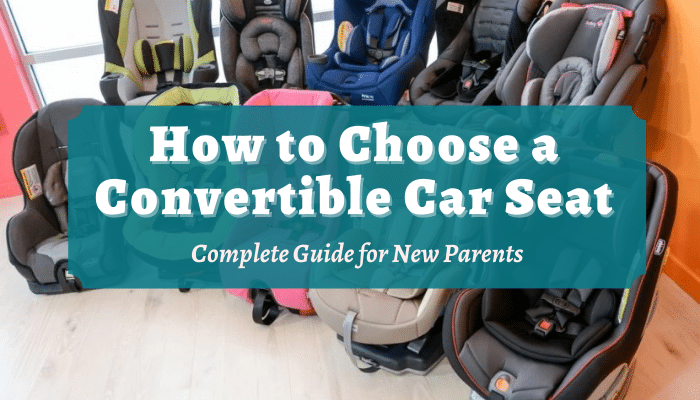
Convertible car seats are simply children’s car seats that can be converted from the rear-facing position to the forward-facing position as you child grows and gets older.
With so many different features and things to look for in a car seat (particularly a safe one), it gets a bit confusing figuring out which ones you should pay attention to.
In this article, I show you step-by-step how to choose a convertible car seat by providing a detailed list of the main features you should keep an eye out for when buying your car seat.
I'll also steer you in the right direction of where you can look, online and in-person, for a safe, high-quality convertible car seat.
What to Look for in a Convertible Car Seat
Installation features
Having a car seat with enhanced installation features can make installing your car seat quicker and easier. One of the best ways to tell if a car seat will be easier to install is if it’s compatible with LATCH (lower anchors and tethers for children). In 2002, the LATCH system was created to make it easier to install your car seat correctly without using a vehicle seatbelt. Nowadays, car seat brands have come up with different modifications for the LATCH system that are tailored to their specific car seat models. Depending on the brand, these modifications can greatly enhance an already easy-to-use system, making it that much easier to install your car seat.
Built-in lock-offs are also a common indicator that a car seat will be easy to install. They’re designed to hold the seatbelt in place to make installation more secure. Without them, the seatbelt webbing can loosen and retract, and this would make it easy for the car seat to move out of place, putting your child at great risk. With that being the case, you may be wondering why all car seats aren’t equipped with lock-offs. It’s because some car seats require the use of locking clips that virtually work the same way, but they tend to be a lot more confusing and harder for parents to use. Having built-in lock-offs will eliminate this hassle and make the car seat easier to use.
Ease of use
When a car seat is rated for its safety, one of the biggest things taken into account is its overall ease of use. If a car seat is equipped with features that are hard to use, it’ll negatively impact your day-to-day experience with the car seat, and it could compromise its overall safety. When you’re looking for a safe convertible car seat, look for features that make it easier to get your child in and out of the car seat.
Also, keep an eye out for features that make it easier to buckle in your child. Some of these features may include harness holders that hold the harness straps out of the way when you’re getting your child in and out of the car or an enhanced harness system that has a quick 3-step fastening process.
I also advise that you read what others have to say about the ease-of-use features of the car seat you’re interested in. Some car seat brands may claim that they have a modified harness system to make buckling up your child quicker, but in actuality, it just makes it harder, so be mindful of that.
Side impact protection
Side impact protection is a great indication that a manufacturer has taken extra precautions to enhance their car seats' safety. I’ve researched and reviewed over a hundred different car seats, and the car seats without side impact protection never ranked very high.
Side impact protection is a feature that provides added support and protection for your child’s head and neck. It may come in layers and typically consists of an adjustable headrest, side wings, or some kind of energy-absorbing foam; it varies depending on the brand. If a car seat is equipped with side impact protection, it was most likely side-impact tested to ensure that it meets or exceeds the federal safety standards.
Having these additional crash test results can provide peace of mind with the assurance that your child is surrounded by high-quality protection. If a car seat does not have side impact protection, even a basic form of it, then I strongly encourage you to find a car seat that does.
Comfort features
When talking about comfort features, I’m referring to what type of padding a car seat has and the type of fabric it’s outfitted in. If a car seat isn’t adequately padded, your child probably won’t have an enjoyable time riding in their car. Most car seats usually come with a seat pad that’s made out of memory, EPS, or EPP foam.
In addition to that, a safe convertible car seat is typically equipped with infant inserts for newborns and infants. While these inserts are designed for comfort, they can also provide additional support to promote proper alignment. If you have a smaller baby, infant inserts can be used to create a safer fit so that your baby isn’t being tossed around too much while you drive.
That being said, if the car seat you’re interested in doesn’t have an infant insert, that’s okay. The infant insert is most likely being sold as an accessory on the manufacturer’s website.
The fabric of the car seat is another important comfort feature to keep in mind. If a car seat claims it has breathable fabric, it means the air is still circulating through your child’s car seat so that they don’t get overheated and sweaty. Also, if your child has sensitive skin, you’ll want to keep an eye out for anti-bacterial fabrics that are made from non-harmful chemicals.
Most car seat brads will advertise the type of fabric used for their car seats, so you shouldn’t have to do too much digging to see if the car seat you’re interested in comes with premium non-toxic fabrics.
Dimensions
The dimensions of a car seat will let you know if it’ll fit in your backseat. A common mistake that new parents make is rushing to buy a car seat without taking into account the size of their backseat. If you don’t pay attention to the dimensions, you’ll end up buying a car seat that doesn’t fit. To avoid doing this, simply measure the length and width of the area where you plan to put the car seat. These measurements will give you a rough idea of what size the car seat needs to be to comfortably fit in your vehicle.
Height/weight requirements
The NHTSA strongly recommends that parents keep their child seated in the rear-facing position for as long as possible because it’s the safest way from them to ride. To adhere to this safety standard, most car seats today come with an extended rear-facing weight range of 40-45 pounds. The higher the rear-facing weight limit is, the better chance you have of keeping your child in the rear-facing position for the recommended amount of time.
What are the Safest Brands of Convertible Car Seats?
Britax
Britax is one of the most popular car seat brands that’s known for their ultra-safe car seats. They’ve created several innovations, including the ClickTight Installation System, SafeCell Technology, Multiple Levels of Side Impact Protection, and a V-Shaped Tether, all of which work together to provide the ultimate protection and make installation easier and more secure.
All of Britax’s car seats are manufactured and tested in the US to provide quality-assured products to their customers. When testing their car seats, Britax checks for harmful chemicals in their fabrics and materials, and they extensively test for frontal and side-impact protection. According to Britax, more than 150 hours are spent testing the individual features of each car seat to ensure that it’s safe to use.
Graco
Graco has a private testing facility in Atlanta, Georgia to make sure that their car seats meet and exceed the US federal safety standard. All of their car seats are Graco ProtectPlus Engineered - a combination of extensive crash tests that test for protection in the front, side, and rear with additional testing that’s based on the New Car Assessment Program (NACP).
Evenflo
Evenflo goes above beyond and beyond the federal safety standard by testing their car seats at energy levels that are 2X the Federal Crash Test Standard. They’ve come up with new technologies that redistribute crash force away from your child and make installing your car seat so much easier. One of their innovations includes SensorSafe Technology that’s designed to alert caregivers when their child has been left in the car. In addition to that, Evenflo was the first company to have a roll-over tested car seat.
Maxi-Cosi
Maxi-Cosi car seats are tested in both America and Europe. They combine their crash test results with data from the Euro NCAP tests to exceed the federal safety standards. Maxi-Cosi conducts full-frontal collision testing in modern testing centers with innovative and advanced technologies to provide a safe, reliable car seat.
Safety 1st
Safety 1st car seats are designed to meet and exceed US and European safety standards. Their crash tests are conducted at the Dorel Europe Testing Center (DETECT) and Dorel Europe Safety Center (DESC).
What are the Best Places to Buy a Convertible Car Seat?

Nowadays, you can easily go online to almost any online retailer and find a reasonably priced convertible car seat. While there are plenty of benefits to doing that, there are also a few downsides that come with buying a car seat online. Let’s take a look at a few pros and cons to buying a car seat online versus buying one in person.
Almost any local retailer you choose to buy from will have an online platform where you can order the car seat you want. Some of the most popular local retailers that sell car seats are Target, Wal-Mart, Kohl’s, and Macy’s.
A few places where you can find quality car seats online include Amazon, Albee Baby, buybuy Baby, and eBay (used).
Convertible Car Seats Buying Guide by Consumer Reports
Conclusion
Choosing a safe convertible car seat can be challenging, but now you have few tools to use to make your search a little easier.
Remember, side-impact protection, installation, and ease of use components are some of the main safety features to look for when buying a convertible car seat.
Also, if you're going to buy online, do your research first to assure yourself that you're buying the right product.

Growing up I was a carefree male going about life like there was no tomorrow. Naturally, I ‘grew’ up, settled down and started a family.
Going from an independent carefree male to a family man was somewhat of a U-turn and required a lot of learning. Luckily for me, my wife works in education and has always been the shining light always ahead of me on all factors kids related.
Initially, my wife didn’t have a driving license (luckily this has now changed and it does make life easier), and all things car related were my task. Child locks were the obvious starting point which lead me down a rabbit hole.
So far we have personally tested dozens of convertible car seats and have owned five despite neither of our kids having reached the age of 5! Simply put, a car seat can be great on paper, work great on trying out but can fail on you in real life.
This is why I have put together this website – to help inform and educate you!
Of course, as I mentioned above, at the end of the day your experience will be the best test so I’d love to hear your experiences and feedback in the comments.
To contact me personally, please do so through my contact page.
I look forward to hearing from you!
Peter
P.S. If you click a link on my site and end up buying a car seat on Amazon, I’ll get paid a small commission (or as the Amazon lawyers put it: “As an Amazon Associate I earn from qualifying purchases”)
Leave a Reply