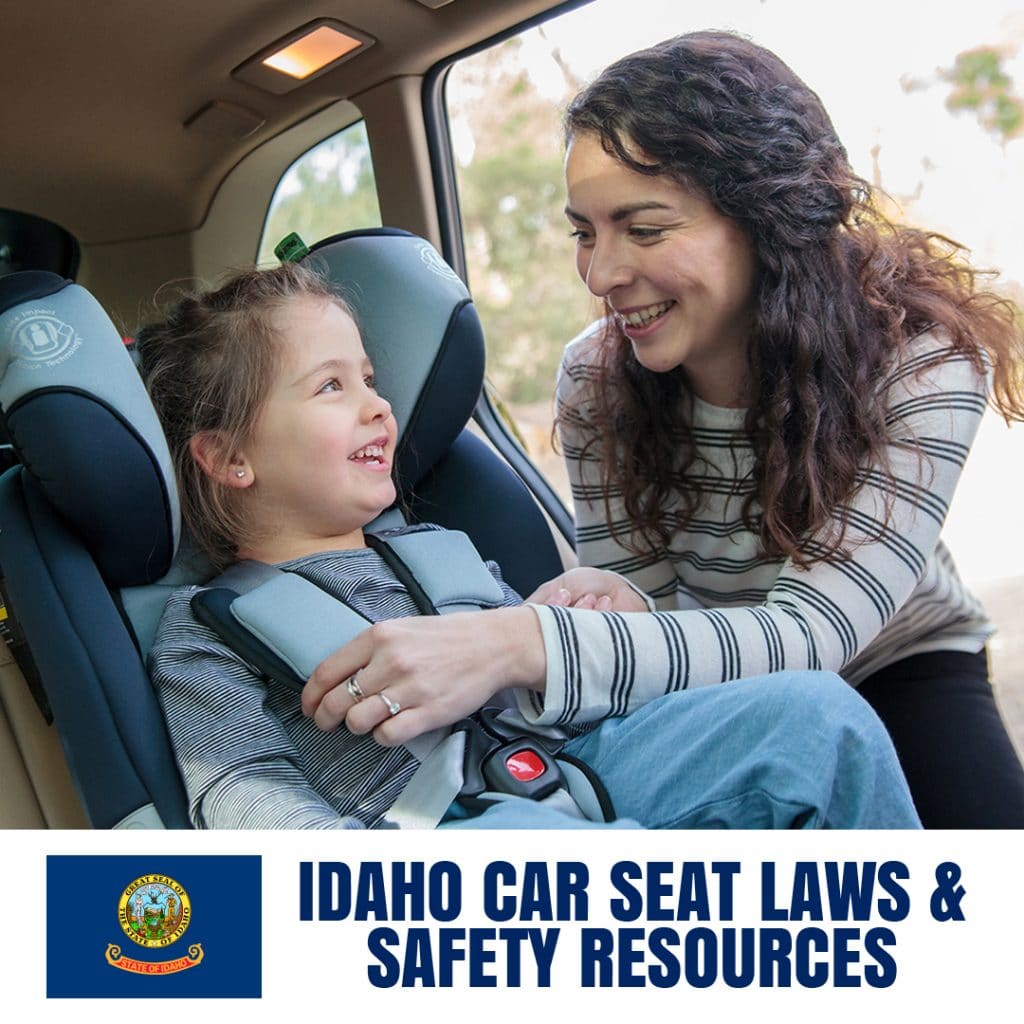
Within the next 2 minutes, the time it will take you to read this article, almost 4 children would be involved in a car accident?
That’s right – according to the National Safety Council, one child gets into a vehicle accident every 33 seconds.
According to studies, a rear-facing seat is the safest place for the babies to be in. The state of Idaho, through Idaho Motor Vehicle law, wants to make sure that all the children on the road are traveling in a safe manner.
Idaho Car Seat Law
According to section 49-672 of Idaho Motor Vehicle law:
“No noncommercial motor vehicle operator shall transport a child who is six (6) years of age or younger in a motor vehicle manufactured with seat belts after January 1, 1966, unless the child is properly secured in a child safety restraint that meets the requirements of federal motor vehicle safety standard no. 213.”
There is a fine of $80 for violating this law.
Idaho Rear-facing Car Seat Law
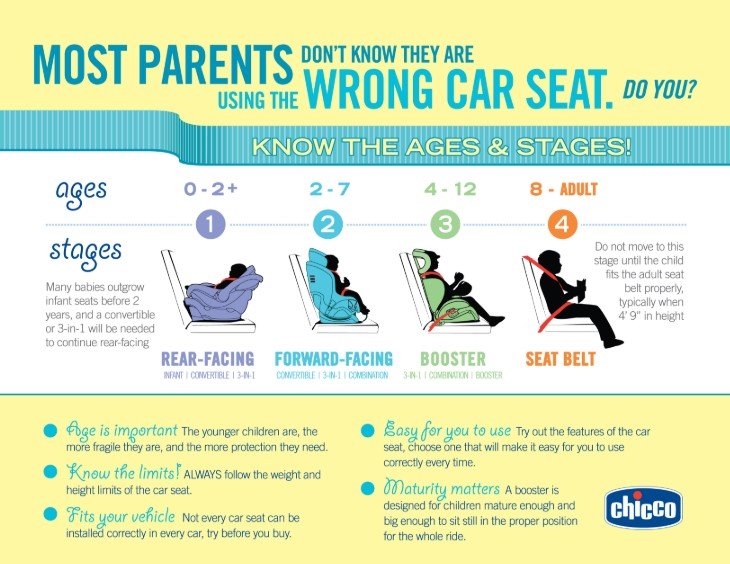
The Idaho state law requires that toddlers and babies must remain in a rear-facing car seat until they are 2 years old, or until they reach the highest weight and height limit allowed by the car seat manufacturer.
Idaho Forward-facing Car Seat Law
After the age of 2 and 40-60 pounds, children should travel in a forward-facing car seat until they reach the upper limit mentioned by the car seat manufacturer.
Child Booster Seat Laws in Idaho
Idaho Transportation department recommends that children from 4 to 8 years of age and under 4’9” should travel in a booster seat.
When Can My Child Sit in the Front Seat in Idaho?
In Idaho, there is currently no age limit for traveling in the front seat. Idaho Transportation Department and children safety experts recommend that your child can sit in the front seat when Lap belt lays across upper thighs, shoulder belt across chest, and knees bend at the seat edge. This usually happens around the age of 13.
Leaving Child in Car Law in Idaho
Idaho doesn’t have any laws in place regarding leaving children in cars unattended.
Is it Illegal to Smoke in a Car with a Child in Idaho?
It is not illegal to smoke in a car with a child passenger.
Taxi Car Seat Law in Idaho
As a taxi is a commercial vehicle, and Idaho law applies to non-commercial vehicles, thus taxis are exempt from this law.
Idaho Law Car Seat - Replacement After Accident
There are currently no guidelines in Idaho laws regarding seat replacement. NHTSA says that you don’t need to replace the car seat if the crash is minor.
Places to Get Car Seat Help in Idaho
Good Car Seat Videos for Idahoan Parents
How to Buckle a Child into a Car Seat with a 5-Point Harness
Understanding Seat Belt Systems
The Children's Hospital of Philadelphia: Car Seat Safety by Age
Car Seat Safety
Lee Memorial Hospital Car Seat Safety
NHTSA’s Installing a Car Seat Properly Tutorial
Infants Car Seat Installation
Resources for More Info on Idaho Car Seat Safety

Growing up I was a carefree male going about life like there was no tomorrow. Naturally, I ‘grew’ up, settled down and started a family.
Going from an independent carefree male to a family man was somewhat of a U-turn and required a lot of learning. Luckily for me, my wife works in education and has always been the shining light always ahead of me on all factors kids related.
Initially, my wife didn’t have a driving license (luckily this has now changed and it does make life easier), and all things car related were my task. Child locks were the obvious starting point which lead me down a rabbit hole.
So far we have personally tested dozens of convertible car seats and have owned five despite neither of our kids having reached the age of 5! Simply put, a car seat can be great on paper, work great on trying out but can fail on you in real life.
This is why I have put together this website – to help inform and educate you!
Of course, as I mentioned above, at the end of the day your experience will be the best test so I’d love to hear your experiences and feedback in the comments.
To contact me personally, please do so through my contact page.
I look forward to hearing from you!
Peter
P.S. If you click a link on my site and end up buying a car seat on Amazon, I’ll get paid a small commission (or as the Amazon lawyers put it: “As an Amazon Associate I earn from qualifying purchases”)
Leave a Reply