Please click image for more info
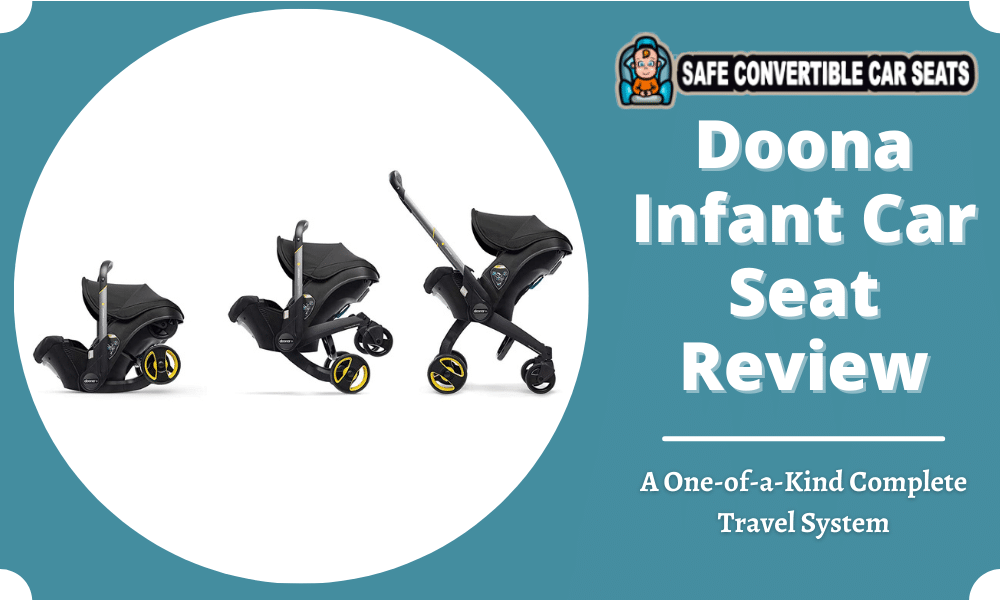
Any parent who likes to keep things simple will truly appreciate the Doona Infant Car Seat, which is billed by its maker as the first ever all-in-one travel system. This innovative model conveniently can be converted from a car seat to a stroller, and back again, with the simple push of a button. It does this by way of wheels that can be folded down and back up again with ease. This makes it a practical option for families who prefer to travel without stowing a potentially bulky stroller in the trunk.
Designed to be used in a rear-facing manner, this car seat features a five-point harness, an anti-rebound bar, and LATCH connectors. In the stroller mode, this model is known for its maneuverability and ability to handle tight turns with ease. It boasts stretchy, breathable fabrics and is available in black, gray, or a handful of bright colors like red, green, and blue.
Overview of Doona Infant Car Seat
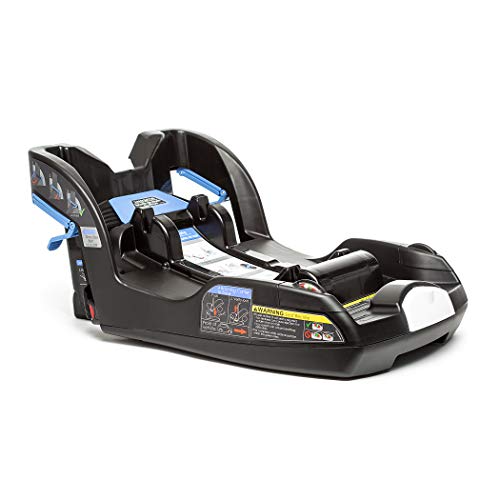
This comprehensive travel system is a favorite among many parents who don’t want to lug around a separate stroller. Its double-wall structure allows the four wheels to fold right into the frame, while these walls’ impact-absorbing properties also provide extra protection during a crash. What serves as the handlebar in the stroller mode doubles as an anti-rebound bar in the car seat setting.
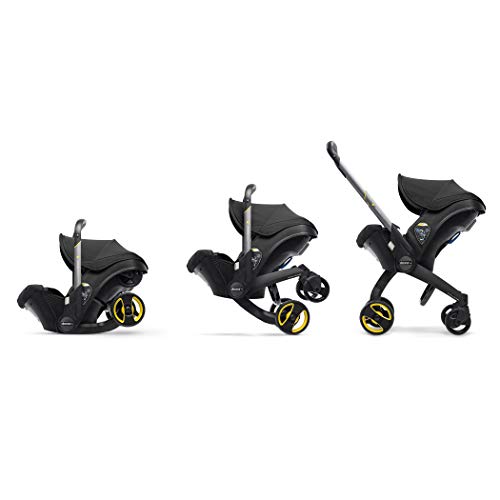
Converting it from the car seat to the stroller simply involves squeezing the lever on the back for the wheels to drop down. Pressing the same lever allows you to roll it back up into car seat mode. As a stroller, it maneuvers and makes tight turns with ease, due to its sleek, streamlined build. It comes with a cushioned, supportive head insert as well as another one that properly aligns a newborn’s head, neck, and back. It’s approved by the FAA for air travel, and is backed by a generous two-year warranty.
This model is made for children weighing from four to 35 pounds and who are up to 32 inches in height. The combined seat and stroller component weighs only 16.5 pounds. It is manufactured by the Simple Parenting company, which was founded by a father who wanted a compact, convenient means of getting around with his daughter.
Safety
The National Highway Traffic Safety Administration, a division of the U.S. Department of Transportation, tests and evaluates car seats for usability, instructions, and safety. Here is how it rated the Doona Infant Car Seat for these factors:
Expiration
Video Overview of Doona Infant Car Seat
Doona Infant Car Seat Specs
FEATURE | DESCRIPTION |
|---|---|
Child weight | 4 - 35 pounds |
Child height | Up to 32 inches |
Lowest harness position | 7” with insert |
Highest harness position | 12.75” without insert |
Dimensions when folded | 23.6” x 17.3” x 26” |
Dimensions when unfolded | 39” x 17.3” x 32.2” |
Car seat/stroller weight | 16.5 pounds |
Base weight | 10.3 pounds |
Doona Infant Car Seat Features
FEATURE | DESCRIPTION |
|---|---|
Safety features | |
Ease of use | |
Longevity features | |
Comfort and Convenience | The Doona seat and inserts are equipped with a moisture-wicking bamboo fabric. The cover is removable and can be placed in the washing machine when there are stains or it’s in need of freshening up. Installing it as a car seat using the included LATCH-equipped base is a simple process. Once it’s locked in securely, the button turns green. Level-indicator stickers on both sides let you know when it’s set up at the proper angle. The seat can be lifted out of the base with the quick push of a button. As mentioned, it’s quite easy to convert the Doona from one mode to the other, especially after you’ve had a little practice. When you’re ready to change it from car seat to stroller, just press the button on the back of the seat, which allows the wheels to release downward. Once it’s in stroller mode and you’re ready to walk, simply press with your foot on the left wheel’s green pedal. In turn, the brake is located on the right wheel’s red pedal. Per the manufacturer, it’s designed for use on both smooth and rough terrain. |
Ease of Installation |
What is included with the Doona Infant Car Seat?
When you purchase this model, you’ll receive the combination seat and stroller, a LATCH-enabled base, an infant insert, a head support, and a vehicle seat protector. Accessories available for purchase separately include a footmuff, handlebar cover, rain cover, snap-on storage, insect net, travel bag, wheel covers, and more. What’s more, replacement parts are readily available online.
Who is the Doona Infant Car Seat Suitable For?

This convertible model is great for busy urban families, as well as for anyone who doesn’t want to deal with a stroller that takes up a lot of space in the trunk. It is a highly convenient choice for those who use Uber or taxi services on a frequent basis. It’s suitable for little ones who weigh from four to 35 pounds and are no more than 32 inches tall. It’s FAA approved for airplane travel when used without the base.
Pros and Cons of the Doona Infant Car Seat
Pros
Cons
Doona Infant Car Seat Installation Videos
Installing the base with the lap shoulder belt:
Installing the base with the lap belt only:
Installation without the base:
Doona Infant Car Seat Owner’s Manual
The manual can be accessed at:
Doona Infant Car Seat vs. Peg Perego Primo Viaggio 4-35:

While there is not currently another model similar to the all-in-one Doona, we’ve chosen to compare it here with the Peg Perego Primo Viaggio 4-35, a high-end, rear-facing infant car seat that’s suitable for babies of the same weight and height range. While it doesn’t convert into a stroller, and the stroller component must be purchased separately, the Primo Viaggio is compatible with strollers made by Peg Perego and Agio. It can also be used with some models of Baby Jogger, BOB, Thule, and UPPAbaby strollers, which may require the purchase of an adapter.
Both the Doona Car Seat and Primo Viaggio 4-35 offer reliable side-impact protection, and the LATCH-equipped bases are easy to install. When it comes to adjustment, one advantage the Primo Viaggio 4-35 has over the Doona is the harness doesn’t need to be rethreaded to adjust for height. In the weight department, however, chances are the Doona car seat/stroller, at 16.5 pounds, will be significantly lighter than the Primo Viaggio 4-35 and any stroller you choose to pair it with. Both of these premium products are rated well for safety and overall quality, so your decision may come down to whether you prefer a model that’s combined with the stroller or one that’s separate from the stroller.
Babylist's Doona Infant Car Seat Review
Conclusion
City life as a new parent is not the easiest thing in the world. The Doona Infant Car Seat Stroller is a premium-priced infant child restraint that transforms into a stroller. The dynamic duo rarely comes together, and for some people, the price is worth the combination.
One of the biggest worries we as parents have when it comes to infant car seats is safety. The Doona Infant Car Seat has strong crash test results and easy-to-use LATCH anchors to help secure it in the backseat. If you choose to use the vehicle seatbelt system, the installation gets a little bit more complicated.
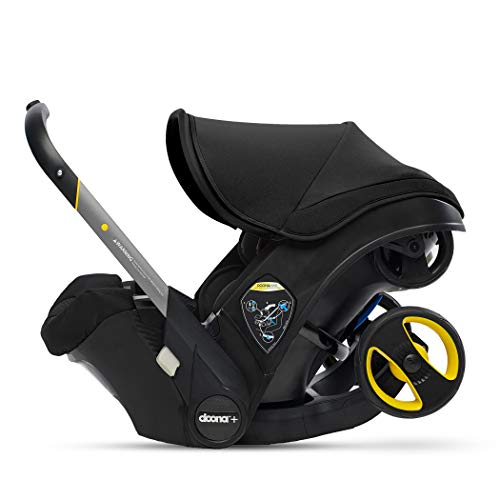
Doona Infant Car Seat (click image for more info)
The most prominent feature is that it is an infant car seat and stroller in one. It eliminates the need to tote around a child carrier and a stroller. It is pretty comfortable for your baby, too. The fabric is durable, and there is plenty of padding. The Doona Infant Car Seat stroller has a full canopy to protect their sensitive eyes and skin from the sun.
If you walk or use public transportation to get around, the Doona Infant Car Seat Stroller is worth the hefty price. It the solution when you need an infant car seat you can trust and transport, and a stroller for those walks in the park.

Growing up I was a carefree male going about life like there was no tomorrow. Naturally, I ‘grew’ up, settled down and started a family.
Going from an independent carefree male to a family man was somewhat of a U-turn and required a lot of learning. Luckily for me, my wife works in education and has always been the shining light always ahead of me on all factors kids related.
Initially, my wife didn’t have a driving license (luckily this has now changed and it does make life easier), and all things car related were my task. Child locks were the obvious starting point which lead me down a rabbit hole.
So far we have personally tested dozens of convertible car seats and have owned five despite neither of our kids having reached the age of 5! Simply put, a car seat can be great on paper, work great on trying out but can fail on you in real life.
This is why I have put together this website – to help inform and educate you!
Of course, as I mentioned above, at the end of the day your experience will be the best test so I’d love to hear your experiences and feedback in the comments.
To contact me personally, please do so through my contact page.
I look forward to hearing from you!
Peter
P.S. If you click a link on my site and end up buying a car seat on Amazon, I’ll get paid a small commission (or as the Amazon lawyers put it: “As an Amazon Associate I earn from qualifying purchases”)
Leave a Reply