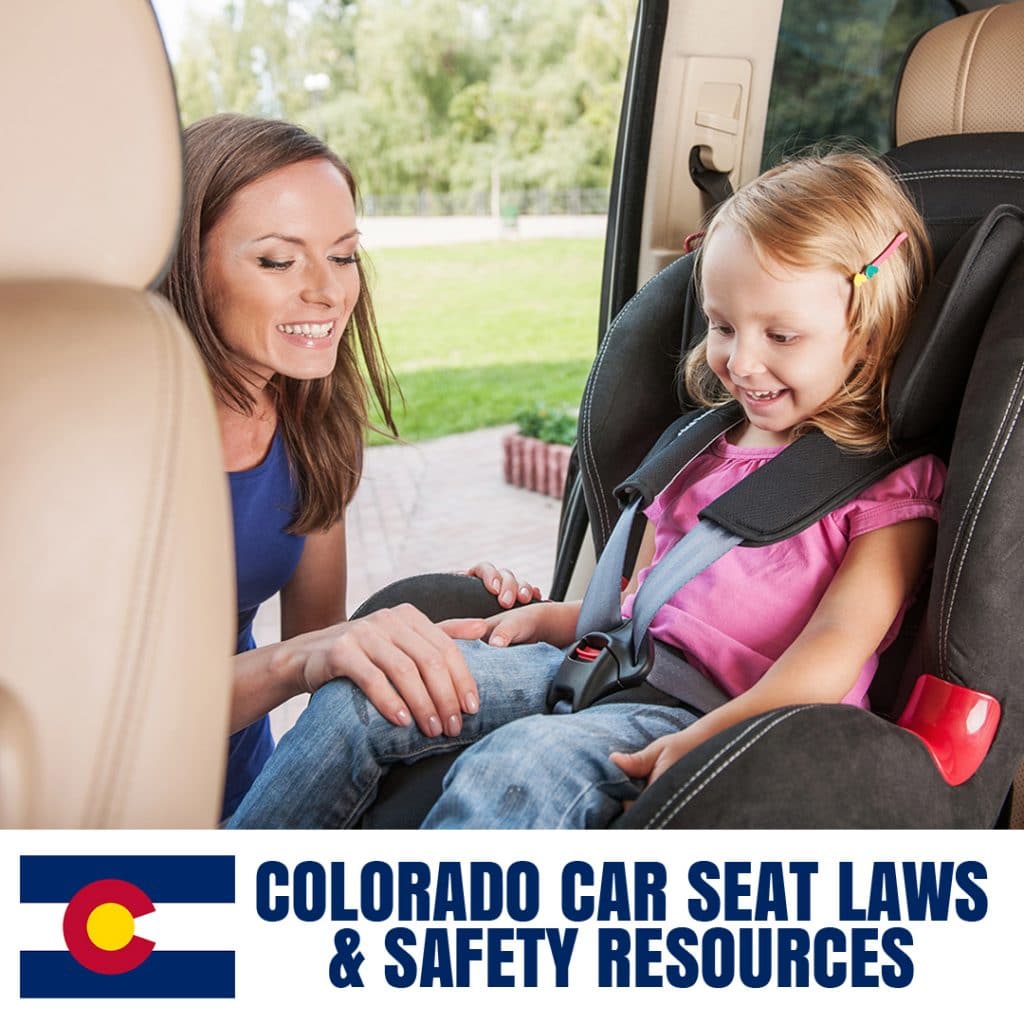
Did you know that in Colorado motor vehicle injuries account for nearly one in every ten injuries suffered by children under the age of 9?
But it doesn’t have to be that way! Use of seat belts are an important step in reducing those rates of injury.

Colorado Car Seat Law
According to Colorado law, every child under the age of 8 should travel with a proper child protection system.
“Every child who is under eight years of age and who is being transported in this state in a motor vehicle or in a vehicle operated by a childcare center shall be properly restrained in a child restraint system, according to the manufacturer's instructions.” (Source)
Colorado Rear-facing Car Seat Law
According to Colorado law, children younger than 12 months and weigh less than 20 pounds should travel in rear-facing car seats.
Colorado Forward-facing Car Seat Law
Between the age of 1 and 4, children who weigh 20 to 40 pounds are supposed to be secured in forward-facing (or rear-facing if they are under the height and weight limit) seats.
Child Booster Seat Laws in Colorado
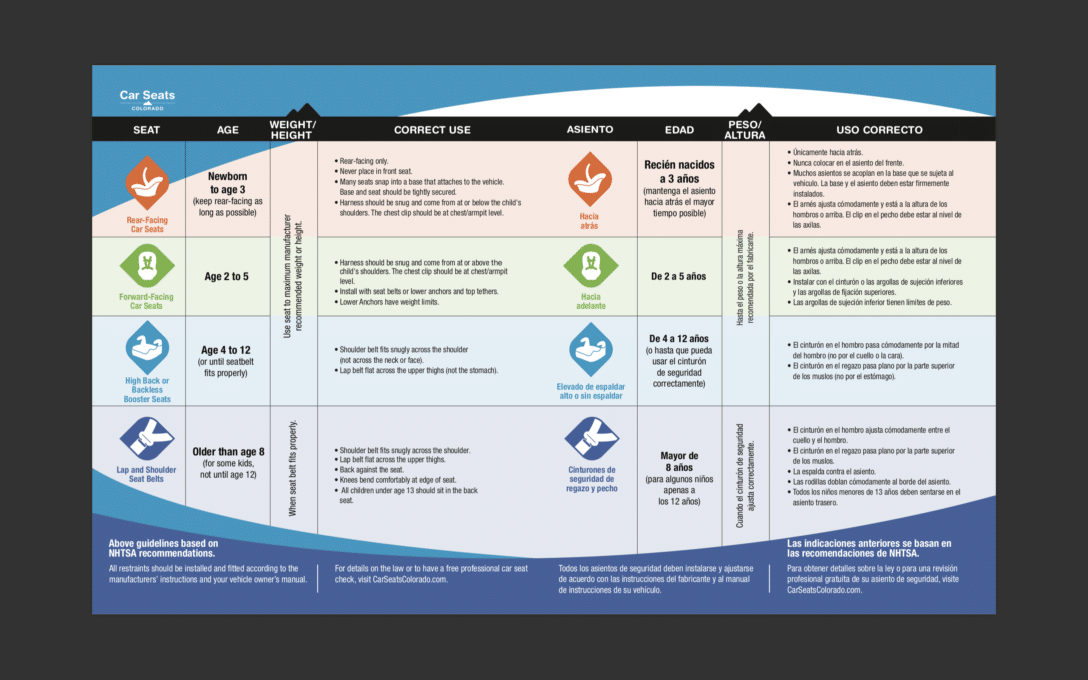
From the age of eight to fifteen, Colorado law requires youngsters to utilise a booster seat or seat belt. This means that kids should remain in the booster seat until they are ready to use the seat belts. The shoulder belt should cover the shoulder and chest (not the neck or face) and the lap belt should lie flat across the upper thighs when using a booster seat and seat belt properly (not the stomach).
When Can My Child Sit in the Front Seat in Colorado?
According to Colorado law, if your child is 1 year or older and weigh more than 20 pounds, it’s legal for them to stay in the front seat. But it is not recommended. You should use an appropriate child restraint system until the age of 15. Please refer to the manufacturer manual to choose the right system. After the age of 15, if the car’s seat belt feels secure, your children can sit in the front seat.
Leaving Child in Car Law in Colorado
It is not a crime to leave children in the car alone. However, since 1998, 7 children have died in hot cars. It is recommended by experts to not leave the children in the cars alone.
Is it Illegal to Smoke in a Car with a Child in Colorado?
Private vehicles are exempt from smoking ban unless they are used for the transportation of children.
Taxi Car Seat Law in Colorado
Taxis are exempt from child safety laws as we see in this section:
“This section does not apply to a child who:
Is being transported in a motor vehicle that is operated in the business of transporting persons for compensation or hire by or on behalf of a common carrier or a contract carrier as those terms are defined in section 40-10.1-101, C.R.S., or an operator of a luxury limousine service as defined in section 40-10.1-301, C.R.S.
Law Car Seat - Replacement After Colorado
It is always a good idea to replace your car seat after a crash. Colorado law wants you to refer to the seat manufacturer to understand the recommendations. (Source)
Places to Get Car Seat Help in Colorado
Good Car Seat Safety Videos for Colorado Parents
Colorado Department of Transportation Child Passenger Safety Tips and Guidelines
5 Things to Know About Car Seats
Car Seat Safety – Safe Car TV
How to Install a Car Seat
Car seat check
Resources for More Info on Colorado Car Seat Safety

Growing up I was a carefree male going about life like there was no tomorrow. Naturally, I ‘grew’ up, settled down and started a family.
Going from an independent carefree male to a family man was somewhat of a U-turn and required a lot of learning. Luckily for me, my wife works in education and has always been the shining light always ahead of me on all factors kids related.
Initially, my wife didn’t have a driving license (luckily this has now changed and it does make life easier), and all things car related were my task. Child locks were the obvious starting point which lead me down a rabbit hole.
So far we have personally tested dozens of convertible car seats and have owned five despite neither of our kids having reached the age of 5! Simply put, a car seat can be great on paper, work great on trying out but can fail on you in real life.
This is why I have put together this website – to help inform and educate you!
Of course, as I mentioned above, at the end of the day your experience will be the best test so I’d love to hear your experiences and feedback in the comments.
To contact me personally, please do so through my contact page.
I look forward to hearing from you!
Peter
P.S. If you click a link on my site and end up buying a car seat on Amazon, I’ll get paid a small commission (or as the Amazon lawyers put it: “As an Amazon Associate I earn from qualifying purchases”)
Hello,
I am trying to reply to an email inquiry you sent us, but when I reply to the email you contacted us from the message comes back as undeliverable.
Sorry about that, Gregory. Seems there was a problem with our email system. We’ll send you an email!