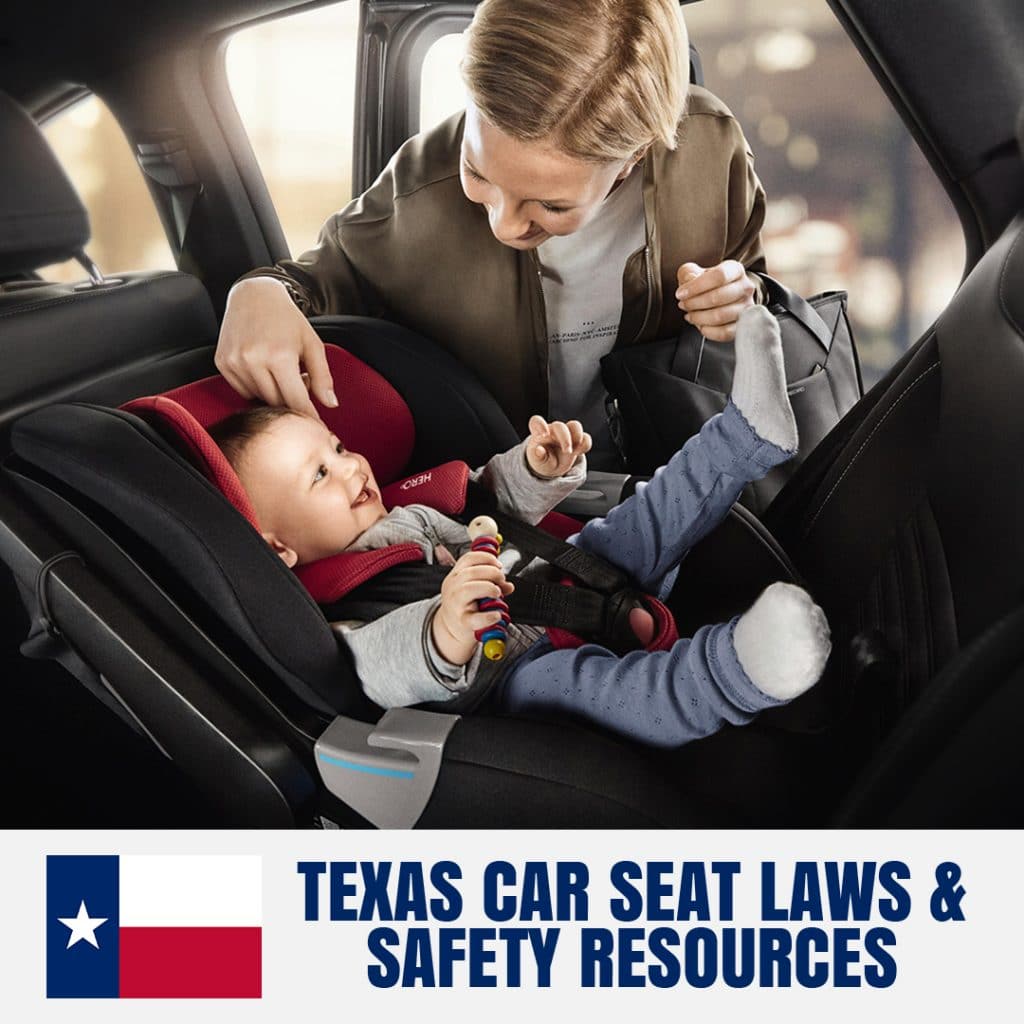
Ask any parent and they’ll say their children are the most important thing in their life. Yet some parents put those precious lives at risk by improperly buckling up their children in the car (in fact, two out of three car seats are used incorrectly by Texan parents).
But we’ve got some info to ensure you’re not one of those parents! Read below to learn important car seat safety info…
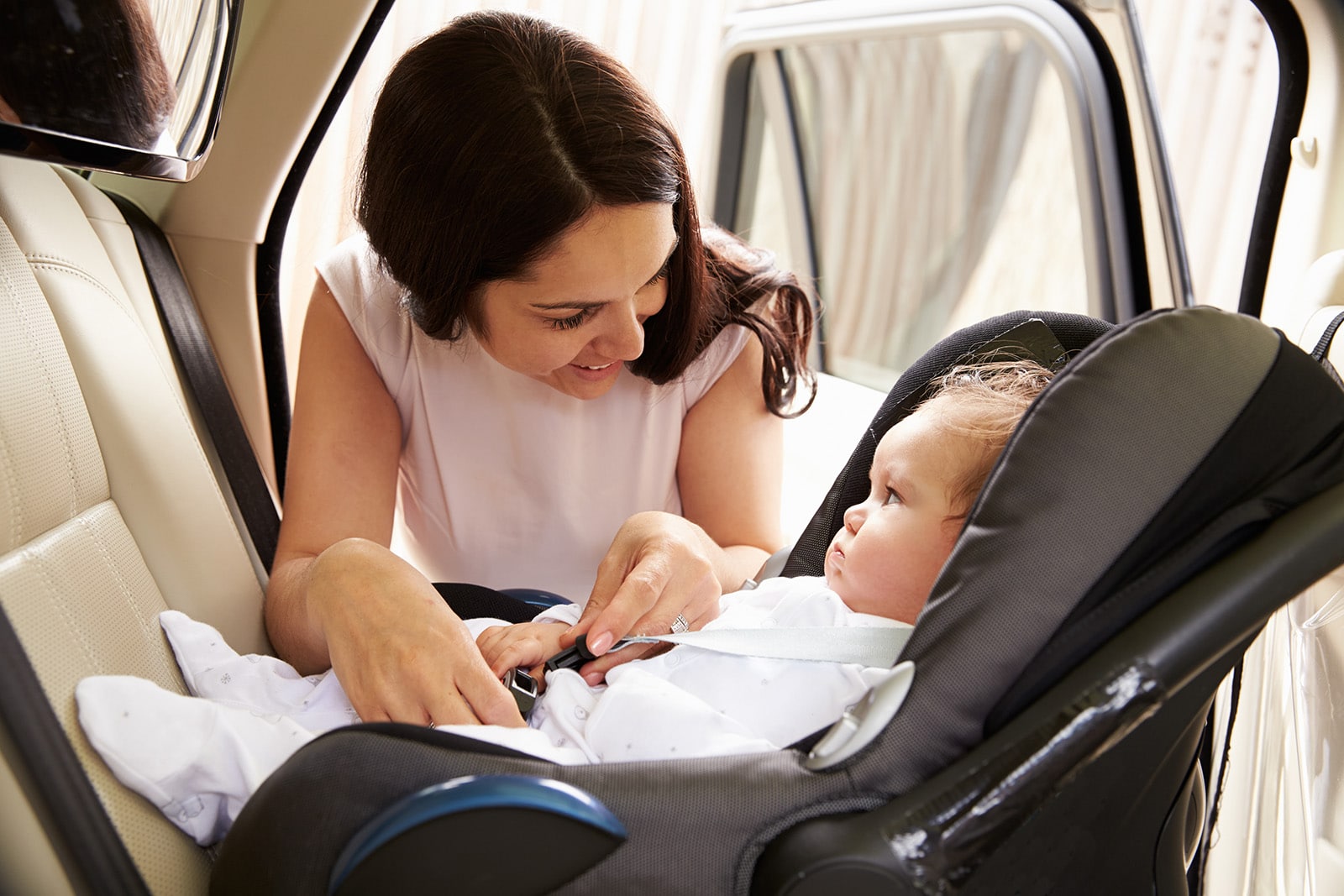
Texas Car Seat Law
545.001 of Texas Transportation Code states that:
“A person commits an offense if the person operates a passenger vehicle, transports a child who is younger than eight years of age, unless the child is taller than four feet, nine inches, and does not keep the child secured during the operation of the vehicle in a child passenger safety seat system.”
Violating this law is punishable by $25.
Texas Rear-facing Car Seat Law
Texas Department of Public Safety (TDPS) says that you must keep using a rear-facing car seat for as long as possible or at least 1 year of age and 35 pounds.
Texas Forward-facing Car Seat Law
According to TDPS, after reaching the rear-facing seat limit, which usually happens at 2 years of age, children must travel in a forward-facing car seat. It is also required that the seat is installed on the backside of the car.
Child Booster Seat Laws in Texas
According to the Texas car seat law, children under the age of 5 AND less than 36 inches tall must continue to use the safety seats. So after your child has outgrown the forward-facing seat, you can graduate them to a booster seat. However, this is not aligned with best practices. You should keep using a booster seat until the child is within the limit and at least they are 8 years old.
When Can My Child Sit in the Front Seat in Texas?
There is no hard number in law. Texas Department of Public Safety says that children are ready for a car’s adult seat belt at the age of 12. According to AAP and other experts, this can be a good time for your child to start traveling in the front seat.
Leaving Child in Car Law in Texas
It is illegal to leave children in a car for more than 5 minutes, given they aren’t accompanied by someone who is 14 or older.
Taxi Car Seat Law in Texas
Texas law says that child restraint law doesn’t apply to “vehicles transporting for hire”.
Texas Law Car Seat - Replacement After Accident
There are no laws in Texas pertaining to car replacement in case of an accident. However, NHTSA says that you should replace the car seat if you have been in a major accident.
Places to Get Car Seat Help in Texas
Here are some resources that can help you with the car seat inspection and provide you further help.
Good Car Seat Videos for Texan Parents
Austin-Travis County car Safety Video
"Imagine"
Car seat Safety Tips from Safe Kids Austin
The Michele and Brooke Ice Story
Car Seat save lives
Child Passenger Safety - 5 Step Test
The Inch Test
It's time we all get it right
How to secure your car seat by Safe Kids Worldwide
Is it time to move from a booster to a seat belt? By safe Kids Worldwide
Tips on How to Install a Car Seat
Car seat check: An easy guide
Car Seat Safety
Resources for More Info on Car Seat Safety in Texas

Growing up I was a carefree male going about life like there was no tomorrow. Naturally, I ‘grew’ up, settled down and started a family.
Going from an independent carefree male to a family man was somewhat of a U-turn and required a lot of learning. Luckily for me, my wife works in education and has always been the shining light always ahead of me on all factors kids related.
Initially, my wife didn’t have a driving license (luckily this has now changed and it does make life easier), and all things car related were my task. Child locks were the obvious starting point which lead me down a rabbit hole.
So far we have personally tested dozens of convertible car seats and have owned five despite neither of our kids having reached the age of 5! Simply put, a car seat can be great on paper, work great on trying out but can fail on you in real life.
This is why I have put together this website – to help inform and educate you!
Of course, as I mentioned above, at the end of the day your experience will be the best test so I’d love to hear your experiences and feedback in the comments.
To contact me personally, please do so through my contact page.
I look forward to hearing from you!
Peter
P.S. If you click a link on my site and end up buying a car seat on Amazon, I’ll get paid a small commission (or as the Amazon lawyers put it: “As an Amazon Associate I earn from qualifying purchases”)
Leave a Reply