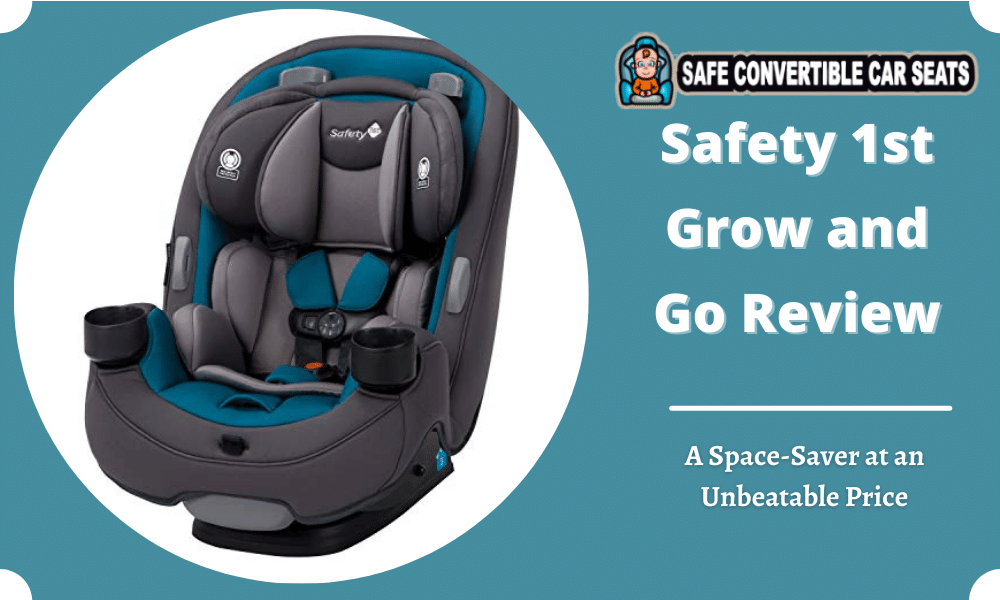
Please click image for more info
Many parents want the convenience of a single car seat that will last their child for years to come, instead of getting a new car seat at every stage of growth. The problem is that those car seats tend to be big, heavy, and take up a lot of room in a car, even when a child is small enough that they don't need such a large car seat.
The Safety 1st Grow and Go is an all-in-one convertible car seat that is designed to save space and weight, with the convenience of a single car seat that can protect a child up to 100 pounds or 52 inches. Even better, it's offered at an unbeatable price. Let's take a closer look at this popular car seat.
Who is the Safety 1st Grow and Go Most Suitable For?

Many all-in-one convertible car seats are big and heavy, because they need to be large enough to support and protect children at the upper limits of the car seat's range, even if the child will be smaller than that for most of the years they use the car seat. This can be a big drawback in an all-in-one; if a parent wanted to buy a new carseat every couple of years, they could probably have a series of car seats that are more perfectly sized to their child and to their vehicle.
Unlike many all-in-ones that are extremely large and heavy, the Safety 1st Grow and Go is compact and light weight for a car seat in this class. In fact, it's designed to save front passengers up to 7 inches of leg room when installed rear-facing, making it a more friendly design for smaller cars.
Pros and Cons of Safety 1st Grow and Go
Pros
Cons
Overview of Safety 1st Grow and Go

The Safety 1st Grow and Go is an all-in-one convertible car seat that transitions from rear-facing, to forward-facing, to a belt positioning booster.
So, it can fit children from 5 – 100 pounds, and fro m19 – 52 inches in height. But it is less than 19 pounds in weight, and just over 19 inches wide, so it saves space and is easier to handle.
The clever design of the Grow and Go also preserves space in the front seat, so that in a rear-facing installation, front passengers can get up to 7 inches more leg room. It's a car seat with everything a growing child needs, and all the convenience that parents need too.
Safety
What are this model’s NHTSA ratings? All car seats sold in the USA must meet or exceed strict federal safety and crash test standards, so the NHTSA does not rate car seats for safety. Instead, they offer ratings and evaluations for ease of use.
According to the NHTSA, the Safety 1st Grow and Go has earned (for the forward-facing installation):
The Safety 1st Grow and Go has earned an overall 2/5 star NHTSA ease of use rating for the rear-facing installation, and 3/5 stars for booster seat installation, for different reasons than those given above.
- Side impact protection? Yes, up to 65 pounds
- Energy-absorbing base? No
- Metal frame? No
Longevity
Ease of Use
Ease of Installation
Comfort and Quality
Expiration
Video Overview of Safety 1st Grow and Go
Safety 1st Grow and Go Specs
FEATURE | DESCRIPTION |
|---|---|
Rear-facing height limit | 19 – 40 inches |
Rear-facing weight limit | 5 – 40 pounds |
Forward-facing height limit | 29 – 49 inches |
Forward-facing weight limit | 22 – 65 pounds |
Booster seat height limit | 43 – 52 inches |
Booster seat weight limit | 40 – 100 pounds |
Car seat weight | 18.7 pounds |
Car seat dimensions | 24.5 x 19.2 x 24.2 in |
Car seat expiration | 10 years |
Safety 1st Grow and Go Features
FEATURE | DESCRIPTION |
|---|---|
Safety features | |
Ease of use | |
Longevity features | |
Quality and comfort features |
What is included with the Safety 1st Grow and Go?
The Safety 1st Grow and Go comes with removable head and lumbar pillows that will help the car seat fit the smallest infants.
Safety 1st Grow and Go Installation
Safety 1st has created a number of videos to help with installation. To prepare the Grow and Go car seat for rear-facing installation, and install rear-facing with LATCH, watch the video here:
To install rear-facing with a vehicle belt, watch the video here:
To install the Grow and Go forward-facing with LATCH, watch the video here:
To install forward-facing with a vehicle belt, watch the video here:
To convert the Grow and Go to booster mode, watch the video here:
Safety 1st Grow and Go Manual
The Safety 1st Grow and Go has different user's manuals depending on the date of manufacture. To find the right user's manual, visit this page and choose the correct date range:
Safety 1st Grow and Go vs. Graco 4Ever
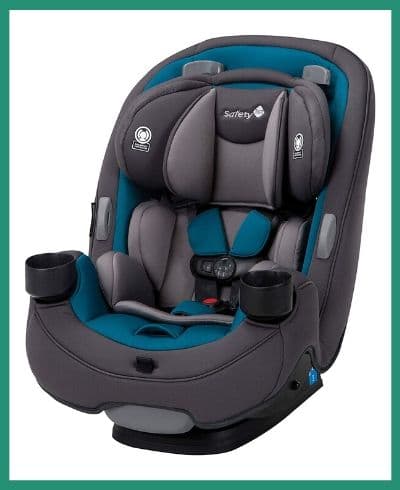
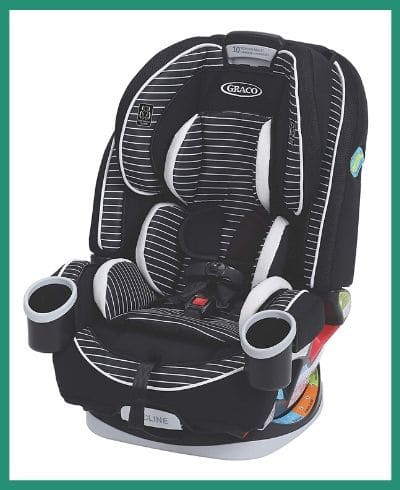
If you are looking for an all-in-one convertible car seat, it's hard to overlook the award-winning Graco 4Ever. It tops many sites and is highly recommended by parents and experts alike. But is it worth the extra money? Let's compare the Safety 1st Grow and Go and the Graco 4Ever.
Header | Safety 1st Grow and Go | Graco 4Ever |
|---|---|---|
Rear-facing child weight | 5 – 40 pounds | 4 – 40 pounds |
Rear-facing child height | 19 – 40 inches | Head must be at least 1 inch below the red handle |
Forward-facing child weight | 22 – 65 pounds | 22 – 65 pounds |
Forward-facing child height | 29 – 49 inches | 27 – 49 inches |
Seat belt booster child weight | 40 – 100 pounds | 30 – 100 pounds |
Seat belt booster child height | 43 – 52 inches | 38 – 57 inches |
Backless booster child weight | N/A | 40 – 120 pounds |
Backless booster child height | N/A | 40 - 57 inches |
Car seat dimensions | 22.1" high x 19.2" wide x 25.2" deep | 24" high x 21.5" wide x 20" deep |
Car seat weight | 18.66 pounds | 22.75 pounds |
Car seat expiration | 10 years | 10 years |
Recline angles | 3 | 6 |
Headrest harness adjustment system | Yes | Yes |
Cupholders | Two integrated cupholders | Two integrated cupholders |
Machine washable seat cushion? | Yes | Yes |
Metal frame? | No | Yes |
Simple installation? | No | Yes |
As you can see, the Graco 4 Ever, with its metal frame, additional booster mode, and higher weight and height limits, is meant to be a more durable, robust, long-lasting convertible. It has a simple installation system, more recline angles, and more harness and headrest positions to ensure an accurate fit over time. For a convertible car seat with that kind of longevity, reliability, and safety, many people think the Graco 4Ever is worth the money.
However, the Safety 1st Grow and Go is smaller, lighter, and much more affordable. For a car seat with up to 10 years of usability at that price, many parents simply can't pass it up. It's a great option as a backup car seat, or for occasional care givers and family members who don't drive a child every day, and don't want a new car seat every time they grow a few inches.
With its more compact size, and a design that saves front passengers up to 7 inches of leg room, the Safety 1st Grow and Go is also a better choice for smaller cars or multiple car seat installations in the same vehicle.
Lauren Happel's Safety 1st Grow and Go Review
Conclusion
When looking for a convertible car seat you can afford, the Safety 1st Grow and Go 3-in-1 Convertible seat might fit the bill. It scores about average when it comes to safety and ease, and it is easy to clean.
The no-rethread harness is always helpful as your little human grows and you make adjustments. It has an adjustable crotch strap, too. Installing the Grow and Go convertible car seat is straightforward. It uses lower anchors for children up to 40 pounds. You can use your vehicle seat belt system in any of the three modes.
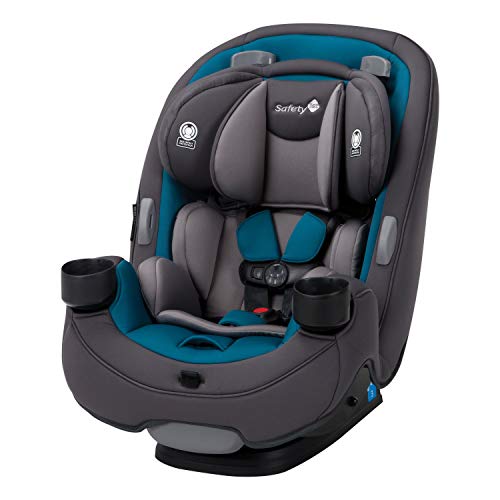
Safety 1st Grow and Go (click image for more info)
Little messes are bound to happen. The Grow and Go convertible car seat has an easily removable cover that you can machine wash. You will likely need to roll a towel to position your little one in the safest and most comfortable recline position.
Families on a budget benefit the most from the Safety 1st Grow and Go 3-in-1 Convertible car seat. It is a rear-facing to forward-facing child restraint that then transitions into a highback booster seat. It will last awhile, but it does have a low weight and height limit.

Growing up I was a carefree male going about life like there was no tomorrow. Naturally, I ‘grew’ up, settled down and started a family.
Going from an independent carefree male to a family man was somewhat of a U-turn and required a lot of learning. Luckily for me, my wife works in education and has always been the shining light always ahead of me on all factors kids related.
Initially, my wife didn’t have a driving license (luckily this has now changed and it does make life easier), and all things car related were my task. Child locks were the obvious starting point which lead me down a rabbit hole.
So far we have personally tested dozens of convertible car seats and have owned five despite neither of our kids having reached the age of 5! Simply put, a car seat can be great on paper, work great on trying out but can fail on you in real life.
This is why I have put together this website – to help inform and educate you!
Of course, as I mentioned above, at the end of the day your experience will be the best test so I’d love to hear your experiences and feedback in the comments.
To contact me personally, please do so through my contact page.
I look forward to hearing from you!
Peter
P.S. If you click a link on my site and end up buying a car seat on Amazon, I’ll get paid a small commission (or as the Amazon lawyers put it: “As an Amazon Associate I earn from qualifying purchases”)
Leave a Reply