Did you know that by Nov 2019 there had been 41 fatalities on Vermont roads?
You can significantly reduce the chance of injuries or worse for your children by using proper car seat belt restraint. And good news! We’ve got important information on this page to help you do just that…
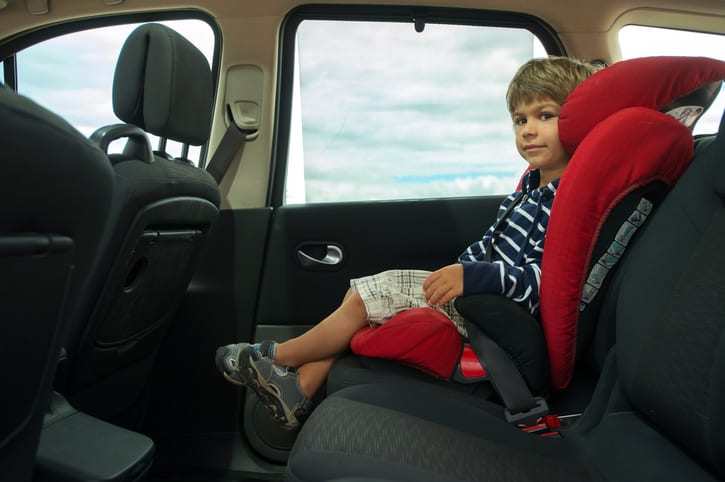
Vermont Car Seat Law
According to § 1258 of Child restraint systems:
“No person shall operate a motor vehicle, other than a type I school bus, in this State upon a public highway unless every occupant under age 18 is properly restrained in a federally approved child passenger restraining system.”
There is a fine of $25 for the first offense, $50 for the second offense, and $100 for the third offense.
Vermont Infant/Toddler Car Seat Law
Under the law, from birth to 12 months, children must travel in a rear-seat or infant-only seat when they weigh less than 20 pounds.
Vermont Rear-facing/Forward-facing Car Seat Law
When a child reaches the age of 1, according to law, they must be secured in a car seat system that is appropriate for their age. This system can be a rear-facing or a forward-facing system. Every car seat manufacturer has instructions on whether a particular seat is a fit for a given age and weight.
Child Booster Seat Laws in Vermont
Vermont law says that children age 8 up to 18 can travel in a car seat belt or booster seat, whichever fits them better.
When Can My Child Sit in the Front Seat in Vermont?
Vermont law says that you can’t place a rear-facing seat in the front. There is no age mentioned in the law but experts recommend that you should keep your child in the back seat for as long as they are using a car seat. They also prescribe the age of 13 for a child to move to the front seat.
Leaving Child in Car Law in Vermont
There are currently no laws in Vermont.
Is it Illegal to Smoke in a Car with a Child in Vermont?
It is illegal to smoke in a vehicle when a child is present in the car.
Taxi Car Seat Law in Vermont
§ 1258 of Child restraint systems states that only type I school buses are exempt from this law. Therefore, taxis are required to follow these laws.
Vermont Law Car Seat - Replacement After Accident
There is no particular law that deals with car seat replacement after being in a crash. NHTSA recommends that you replace your car seat every 6 years and if you have been in a major crash.
Places to Get Car Seat Help in Vermont
Here are some resources that can help you with the car seat inspection and provide you further help.
Good Car Seat Videos for Vermonter Parents
The Michele and Brooke Ice Story
Car Seat save lives
How to secure your car seat
Is it time to move from a booster to a seat belt?
How to Install a Car Seat
Car seat check: An easy guide
Child Passenger Safety - 5 Step Test
The Inch Test
It's time we all get it right
When a Child Can Move Out of a Booster Seat
Resources for More Info on Car Seat Safety in Vermont

Growing up I was a carefree male going about life like there was no tomorrow. Naturally, I ‘grew’ up, settled down and started a family.
Going from an independent carefree male to a family man was somewhat of a U-turn and required a lot of learning. Luckily for me, my wife works in education and has always been the shining light always ahead of me on all factors kids related.
Initially, my wife didn’t have a driving license (luckily this has now changed and it does make life easier), and all things car related were my task. Child locks were the obvious starting point which lead me down a rabbit hole.
So far we have personally tested dozens of convertible car seats and have owned five despite neither of our kids having reached the age of 5! Simply put, a car seat can be great on paper, work great on trying out but can fail on you in real life.
This is why I have put together this website – to help inform and educate you!
Of course, as I mentioned above, at the end of the day your experience will be the best test so I’d love to hear your experiences and feedback in the comments.
To contact me personally, please do so through my contact page.
I look forward to hearing from you!
Peter
P.S. If you click a link on my site and end up buying a car seat on Amazon, I’ll get paid a small commission (or as the Amazon lawyers put it: “As an Amazon Associate I earn from qualifying purchases”)
Leave a Reply