
When buying a car seat for the first time, there are so many safety regulations and recommendations that you either won't be aware of or that you're confused about - and that's okay!
There are many things you can do to ensure that your child has a safe car seat experience.
One of these things, believe it or not, includes installing your car seat in the right place. But, what do I mean by that?
In this article, we'll be taking a quick look at what research has to say about the placement of car seats, and from there I'll explain the safest place to install your car seat, depending on the type of car you have, how many car seats you have, and if you're installing the car seat(s) in the rear-facing or forward-facing positions.
Safest Car Seat Placement for All Ages & Stages
Safest place for forward-facing car seat
If it’s the only car seat, the safest place to put a forward-facing car seat is on the center seat of the back seat.
The same can be said for a rear-facing car seat as well.
It’s statistically proven that the center seat is the safest place to put a car seat.
One study, conducted in 2008 to evaluate the association between a car seat’s placement in the backseat and risk of injury, showed that children seated in the center, between the ages of 0 and 3, had a 43% less chance of injury in a collision than children seated on the driver and passenger side of the vehicle.
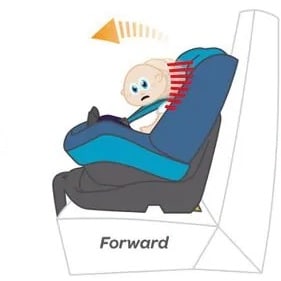
Also, in a study investigating the survival rates of children in car seats involved in a fatal collision, the results showed that when placed in the center, children have a 13% increased chance of survival.
Safest place for a car seat in a minivan or SUV
Where you put the car seat in a minivan or SUV depends on several factors.
But, what if you’re installing more than one car seat?
Now, do these recommendations for car seat placement change, depending on if they’re installed in the rear-facing or forward-facing positions?
We’ll get into that a little bit later.
Car seats in trucks with no back seat
According to the US Department of Transportation, you legally can install a car seat in the front seat of a truck as long as the seat/bench can support 85% of the child’s car seat.
But it's important to know that you shouldn't install in in the rear facing car seat due to air bag deployment hazard.
Can you put a forward-facing car seat in the middle?
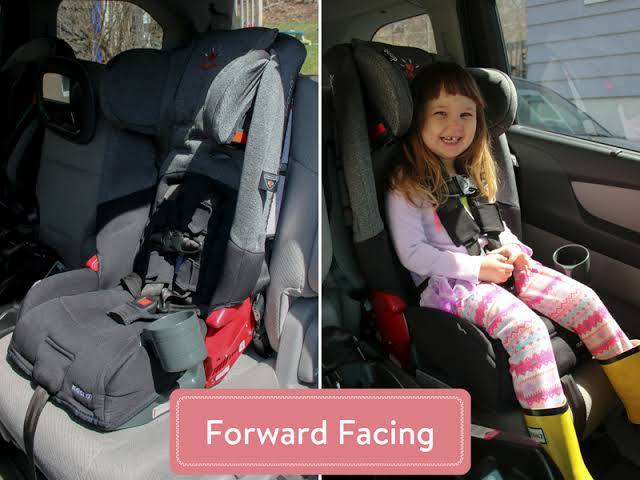
If it’s the only car seat that needs to be installed, yes, you can put a forward-facing car seat in the middle of the backseat.
As I mentioned before, placing your car seat on the center seat of the backseat will ALWAYS be the safest place to install your car seat.
Now, while you can place a forward-facing car seat in the middle, if you have other children riding in the backseat that don’t require the use of a car seat, then doing that may not be the best choice.
The reason being is because most car seats are designed with side impact protection that works well when the car seat is used in the forward-facing position.
Your child that doesn’t need a car seat has no protection at all, so it would be safer to seat them in the middle and place your forward-facing car seat on the outer seats of the backseat.
Car seat behind driver or passenger?
You should only install a car seat behind the driver or passenger seats under the following conditions:
If you have to install your car seat on the outer seats of the backseat, the first place you should utilize is behind the passenger seat.
After doing some extensive research, I haven’t found a clear-cut answer as to why that’s the reason.
But, from the answers I did find, I was able to piece together that the reason why you should install a car seat behind the passenger seat is that there will be a good amount of times where no one is occupying the passenger seat.
So, in the event of a collision, there’s more space to cushion the impact.
Conversely, if you install your car seat behind the driver seat, in the event of a collision, if you’re thrown back, there’s a higher chance of injury for your child.
Safest place for 2 car seats
The safest place to install two car seats depends on if you’re installing the car seats in the rear-facing or forward-facing positions.
If both of the car seats are rear-facing/forward-facing, place the younger child in the middle and the older child behind the passenger seat.
Since the older child is physically stronger and more developed, they’ll be a bit more able to handle the impact force of a collision.
Of course, if your children are twins, install one car seat in the middle and one behind the passenger seat.
If one of the car seats you’re installing is a rear-facing car seat and the other is a forward-facing car seat, you should place the forward-facing car seat in the middle and the rear-facing one behind the passenger seat.
Children riding in a forward-facing car seat have fewer safety features protecting them than those riding in a rear-facing car seat.
So, they need to be placed in the middle to reduce the risk of injury in a collision.
Safest car seat placement if it can be installed properly
Conclusion
It may be hard to believe that there's one area of the backseat that's safer for your children, but studies have proven that the middle seat is the safest place.
Remember, if you have more than one car seat, the center seat and the seat behind the passenger are the best places to install your car seats.
Also, unless it's absolutely necessary, car seats should NEVER be installed in the front seat.
Lastly, the child in the car seat with the least protection should ride in the middle.

Growing up I was a carefree male going about life like there was no tomorrow. Naturally, I ‘grew’ up, settled down and started a family.
Going from an independent carefree male to a family man was somewhat of a U-turn and required a lot of learning. Luckily for me, my wife works in education and has always been the shining light always ahead of me on all factors kids related.
Initially, my wife didn’t have a driving license (luckily this has now changed and it does make life easier), and all things car related were my task. Child locks were the obvious starting point which lead me down a rabbit hole.
So far we have personally tested dozens of convertible car seats and have owned five despite neither of our kids having reached the age of 5! Simply put, a car seat can be great on paper, work great on trying out but can fail on you in real life.
This is why I have put together this website – to help inform and educate you!
Of course, as I mentioned above, at the end of the day your experience will be the best test so I’d love to hear your experiences and feedback in the comments.
To contact me personally, please do so through my contact page.
I look forward to hearing from you!
Peter
P.S. If you click a link on my site and end up buying a car seat on Amazon, I’ll get paid a small commission (or as the Amazon lawyers put it: “As an Amazon Associate I earn from qualifying purchases”)
Thank you for your article. We are about to install a 2nd rear-facing car seat in our compact SUV, 2nd row bench. You answered some questions we have. Good to know that it’s preferred to have the older child in the middle once we turn her forward-facing. This is the opposite of my thinking but I understand what you mean by the additional safety measures on rear-facing car seats. Thanks again!!
I’m trying to get myself some sort of van to put my 2 kids inside. Both are still able to be rear facing. There are many Vans that have bucket seats in the 2nd row but bench ones on the back, what would be good placement for my children?
Look at the Honda Odyssey it had the middle row as a bench seat clear up through 2016. Not for sure about newer models as they were out of my price range.
Still trying to understand where to put mine. I have a toddler 2 1/2 forward facing and I’ll have a new born rear facing. Suggestion on how to set them up? Thanks!!
I read your article and I believe behind the passenger seat may not work as this the side for blind side. This side receives collision so the child seated there will absorb the impact from the other car striking it. No the center of the seat, if a car is traveling 65 miles per hour and collided with another vehicle the car seat with child weighing 20 lbs. is now a projectile traveling 85 miles per hour. What will protect or slow the child down as it traveling forward.
This was SO helpful!! I have three across– 2 car seats and a booster– and had been searching for this information for over a year. Thank you!
We have three kids in the back seat. 2 1/2 year old in a rear facing (could go forward facing, but wanted to keep him rear facing as long as possible), 6 year old in forward facing and 8 year old in booster seat. What configuration do you recommend? Thanks!
I have twins and trying to buy a convertible car seat that would fit Middle and behind passenger seat as you reccomended but unfortunately I can’t find a car sit that fits in my suv Infinity QX60.
I was told to use Diono 3Rxt but the middle sit is a bit wiggly. Is it normal? Any other car seat you reccomend for twins to stay mid seat and behind passenger?
Thanks