Please click image for more info
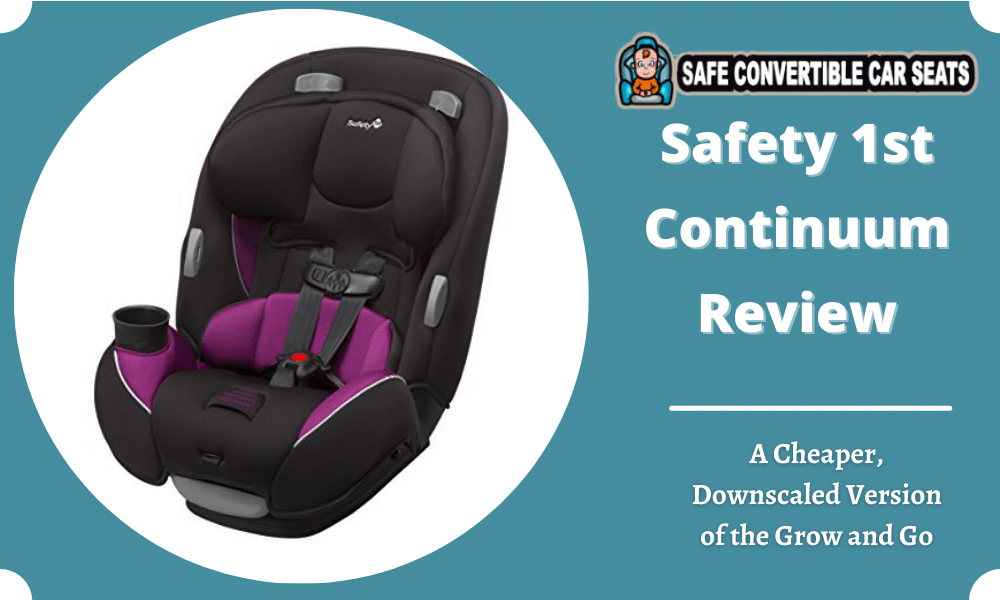
In our Safety 1st Continuum review, we look at this affordable convertible car seat that’s basically a cheaper version of Safety 1st’s Grow and Go with lower height and weight limits.
Here’s a quick rundown of the Continuum’s features:
Now let’s jump into the details!
Safety 1st Continuum Overview

The Continuum provides parents with three different seating modes to ensure the car seat grows with the child, which reduces the expense of replacing the car seat as your child grows. The Continuum is appropriate for infants weighing just five pounds provided the comfort pillow is used. The forward and rear-facing options, and the booster seat will carry the child through until a weight of 80 pounds is reached.
The car seat has a seat pad parents can remove and wash in a washing machine whenever dirty. The cup holder is removable for washing, and is placed where the child can reach drinks easily. Since the weight of the car seat is only 12.5 pounds, parents should not experience any difficulties removing or carrying the Safety 1st Continuum.
Expiration
Safety 1st Continuum Video Overview
Safety 1st Continuum Specs
Safety 1st Continuum Features
Safety Features
Convertible Car Seat Features
Design Features
Installation Features
Usage Features
Who is the Safety 1st Continuum Most Suitable For?

The car seat is suitable for children up to 80 pounds. Infants between five and 40 pounds are secure in the rear-facing mode. The comfort pillow is required for very small infants. In the forward-facing position, toddlers between 22 and 50 pounds are protected. Older children between 40 and 80 pounds are suited for the booster mode. The body pillow insert must be used for small infants and newborns, with the headrest in the lowest position.
What is Included with the Safety 1st Continuum?
The car seat includes one removable cup holder, a comfort pillow, and a removable and washable seat pad. The manufacturer offers optional accessories sold separately.
Pros and Cons of the Safety 1st Continuum
Pros
Cons
Safety 1st Continuum Installation
An installation video for the Continuum below:
Safety 1st Continuum Manual
Links for the manufacturer's manual are available at:
Safety 1st Continuum vs Cosco Easy Elite
VS
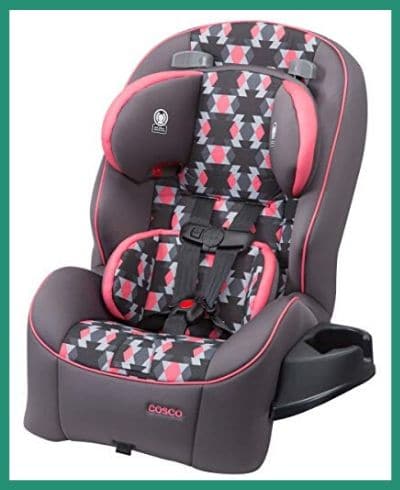
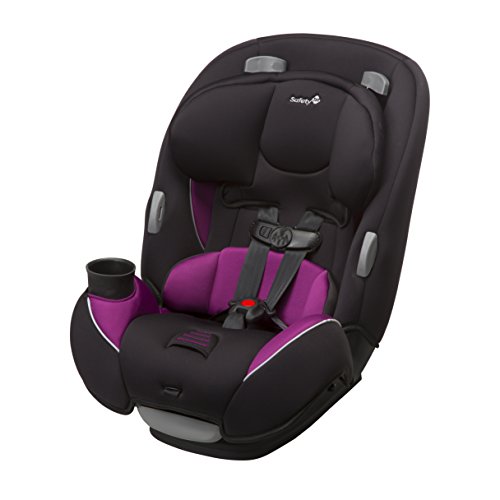
Both the Safety 1st Continuum and Costco Easy Elite are convertible car seats with three different modes for children between five and 80 pounds. The weight limit for the rear-facing mode in both models is five to 40 pounds. Both models provide two options for the forward-facing mode. The first is for children between 22 and 50 pounds. The second is the booster for children between 40 and 80 pounds.
The Easy Elite weighs just 14 pounds to make the car seat easy to switch between vehicles. The Continuum is just 12.5 pounds, making transporting the car seat even easier. Both seats offer comfort due to the padding. Children will be comfortable sitting in either one. The padding on the headrest for the Continuum is slightly more extensive than the Easy Elite.
Older children will be comfortable in the booster mode provided the weight and height ranges are met. The cover for both models can be removed and are safe for a washing machine and dryer. Both models offer removable cup holders. The Continuum provides one cup holder, the Easy Elite two. The Continuum is easier for parents to install. The fit of the Safety 1st Continuum car seat is snug against the vehicle seat.
Keep in mind that some parents report that the Cosco Easy Elite has a tendency to wiggle even when installed correctly.
Safety 1st Continuum Review by Apex Review
The Final Word
High-quality convertible seats at a reasonable price are hard to find. The Safety 1st Continuum is a 3-in-1 that transitions from a rear-facing to forward-facing and then a highback booster car seat.
The ease of installation comes in every mode. When forward-facing, you use the lower anchors to secure the convertible car seat. You can use your vehicle seat belt, too. The Continuum does require a rolled towel when you adjust the rear-facing recline. The Continuum convertible seat does have a unique shape that might make installation harder.
Safety 1st Continuum (click image for more info)
If you are looking for an easy to use convertible car seat, the Continuum 3-in-1 might be for you. The harness is easy to adjust from the front of the seat and does not require you to rethread it. The crotch strap is simple to tighten, too. However, in booster mode, the shoulder belt might slip out of the guide.
Parents with smaller than average-sized kids benefit from the Safety 1st Continuum 3-in-1 because of its lower height and weight limits. It is also affordable and comfortable to use on a daily basis.

Growing up I was a carefree male going about life like there was no tomorrow. Naturally, I ‘grew’ up, settled down and started a family.
Going from an independent carefree male to a family man was somewhat of a U-turn and required a lot of learning. Luckily for me, my wife works in education and has always been the shining light always ahead of me on all factors kids related.
Initially, my wife didn’t have a driving license (luckily this has now changed and it does make life easier), and all things car related were my task. Child locks were the obvious starting point which lead me down a rabbit hole.
So far we have personally tested dozens of convertible car seats and have owned five despite neither of our kids having reached the age of 5! Simply put, a car seat can be great on paper, work great on trying out but can fail on you in real life.
This is why I have put together this website – to help inform and educate you!
Of course, as I mentioned above, at the end of the day your experience will be the best test so I’d love to hear your experiences and feedback in the comments.
To contact me personally, please do so through my contact page.
I look forward to hearing from you!
Peter
P.S. If you click a link on my site and end up buying a car seat on Amazon, I’ll get paid a small commission (or as the Amazon lawyers put it: “As an Amazon Associate I earn from qualifying purchases”)
Leave a Reply