Last Updated: 30th September 2023
Car seats are the most effective way to save lives; they reduce the risk of death by 71% for infants and by 54% for toddlers ages 1 to 4.
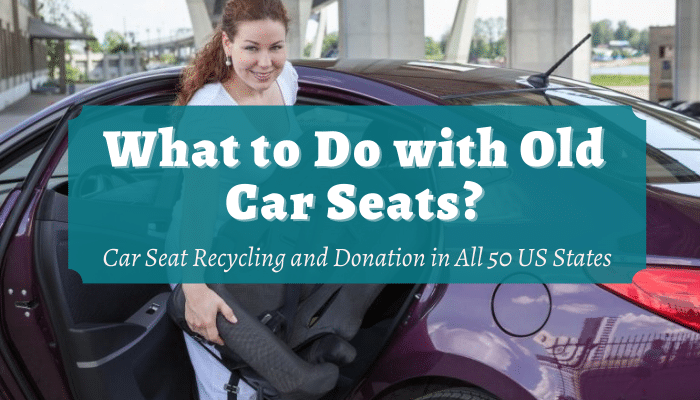
But children outgrow the seats, plus they do actually expire. What should you do with a used car seat after it's served its purpose?
What to do with used car seats?
1. Give the used car seat to friends or family
If you choose to pass it on to friends or family, or to donate it, it is crucial to ensure the seat's integrity. This means it should not have been involved in any accidents. However, the NHTSA does advise that car seats can be reused if they have only been in a minor crash
Also, make sure that the car has not expired and hasn’t been recalled.
2. Donate the car seat
Giving away a car seat seems smart; why toss it if it works well and can help parents who don’t have much money, right?
Sadly, a lot of charities won’t take used car seats. They can’t be sure where the seats have been, and they don’t want to take any chances.
So, we made a list of groups that will take car seats. They check them out really well and give them to people who need them.
3. Recycle the car seat
Another option is car seat recycling.
Car seat plastic can take anywhere from 100 to 1000 years to decompose. We might very well be saving our children now and destroying the planet for future generations.
Unfortunately, there is a caveat here too; recycling car seats doesn’t make sense economically.
Car seats are hard to recycle because they are made of a mixture of materials - rigid plastic, metal and fabric - strongly bonded together to withstand high impacts.
It takes a lot of effort to separate these materials and for private companies, it is just not profitable.
Having said that, we've also done the research to compile a list of places that do recycle car seats in the US.
Below you'll find the Web's most comprehensive list of organizations in every US state where you can donate a car seat and recycle a car seat. Let’s get into it!
4. Throw it to the trash (car seat disposal)
If the above solutions are not an option for you, your last resort is to throw your car seat to the trash.
Best Car Seat Recycling and Donation Programs in US

National Car Seat Recycling & Donation

Car Seat Recycling & Donation in Arizona

Car Seat Recycling & Donation in Arkansas

Car Seat Recycling & Donation in California

Car Seat Recycling & Donation in Colorado

Car Seat Recycling & Donation in Connecticut

Car Seat Recycling & Donation in Florida

Car Seat Recycling & Donation in Hawaii

Car Seat Recycling & Donation in Idaho

Car Seat Recycling & Donation in Illinois

Car Seat Recycling & Donation in Indiana

Car Seat Recycling & Donation in Iowa

Car Seat Recycling & Donation in Kentucky

Car Seat Recycling & Donation in Maine

Car Seat Recycling & Donation in Maryland

Car Seat Recycling & Donation in Massachusetts

Car Seat Recycling & Donation in Michigan

Car Seat Recycling & Donation in Minnesota
There are a couple of recycling options in Minnesota:

Car Seat Recycling & Donation in Missouri

Car Seat Recycling & Donation in Montana

Car Seat Recycling & Donation in Nebraska

Car Seat Recycling & Donation in Nevada

Car Seat Recycling & Donation in New Hampshire

Car Seat Recycling & Donation in New Jersey

Car Seat Recycling & Donation in New Mexico

Car Seat Recycling & Donation in New York

Car Seat Recycling & Donation in North Carolina

Car Seat Recycling & Donation in North Dakota

Car Seat Recycling & Donation in Ohio

Car Seat Recycling & Donation in Oklahoma

Car Seat Recycling & Donation in Oregon

Car Seat Recycling & Donation in Pennsylvania

Car Seat Recycling & Donation in Rhode Island

Car Seat Recycling & Donation in Tennessee

Car Seat Recycling & Donation in Texas

Car Seat Recycling & Donation in Utah

Car Seat Recycling & Donation in Virginia

Car Seat Recycling & Donation in Washington

Car Seat Recycling & Donation in West Virginia

Car Seat Recycling & Donation in Wisconsin
How To Recycle Your Old Child Car Seat by Earth911TV
Can you donate car seats to Goodwill?
No, due to Government Rules and laws, Goodwill does not accept car seats.
Can you donate car seats to Salvation Army?
Salvation Army are unable to accept used car seats, due to safety concerns.
What to know about expired car seats
Helpful Tip: Doctor from IU Health share about car seat safety
Read next:

Growing up I was a carefree male going about life like there was no tomorrow. Naturally, I ‘grew’ up, settled down and started a family.
Going from an independent carefree male to a family man was somewhat of a U-turn and required a lot of learning. Luckily for me, my wife works in education and has always been the shining light always ahead of me on all factors kids related.
Initially, my wife didn’t have a driving license (luckily this has now changed and it does make life easier), and all things car related were my task. Child locks were the obvious starting point which lead me down a rabbit hole.
So far we have personally tested dozens of convertible car seats and have owned five despite neither of our kids having reached the age of 5! Simply put, a car seat can be great on paper, work great on trying out but can fail on you in real life.
This is why I have put together this website – to help inform and educate you!
Of course, as I mentioned above, at the end of the day your experience will be the best test so I’d love to hear your experiences and feedback in the comments.
To contact me personally, please do so through my contact page.
I look forward to hearing from you!
Peter
P.S. If you click a link on my site and end up buying a car seat on Amazon, I’ll get paid a small commission (or as the Amazon lawyers put it: “As an Amazon Associate I earn from qualifying purchases”)
The Utah information about the Safe kids Salt Lake Recycling initiative is inaccurate. I emailed them this week and they no longer recycle expired car seats.
In your list of places to RECYCLE a car seat (in Oklahoma) the only places listed are placed that will take donations of new or unexpired car seats. Maybe you should change your list to places to DONATE. This told me nothing about where I can recycle a car seat that is past its expiration.