
It can seem challenging to keep a baby fed and happy, especially when you're on the go.
If you're looking for a way to make feeding your little one easier, you may wonder if you can feed them in their car seat.
In this article, we'll answer that question and provide some tips on what not to feed your baby in a car seat.
We'll also review five of the best baby-feeding chairs to help make your life a little bit easier.
Can I Bottle Feed My Baby in a Car Seat?
The short answer is yes. You can bottle-feed your baby in a car seat. However, you shouldn't do so while driving.
You can't properly monitor your baby while driving.
It can be dangerous if you have to make sudden stops or turns, as it can cause the bottle's contents to get into your baby's lungs.
As well, the bottle could become a projectile during a car accident.
Another factor to consider is your state’s law regarding child safety seats.
Beyond your child’s eating safety, you also don’t want to let a police officer believe you aren’t strapping your baby in correctly.
California, for instance, requires babies to sit in rear-facing car seats. Don’t turn your baby around to feed them in a moving car.
It is best practice to feed your baby before or after you drive.
That way, you can dedicate your full attention to the road without worrying about feeding your little one.
What Can I Feed My Child While Driving?
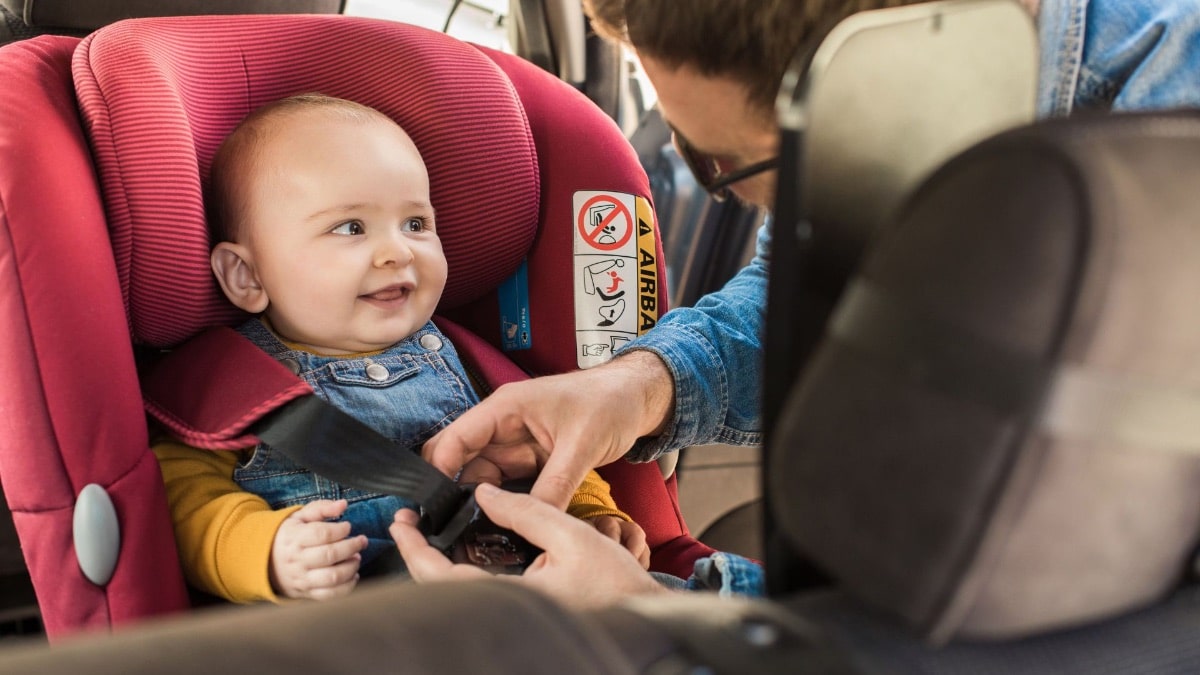
The American Academy of Pediatrics offers tips about feeding your baby.
After you know those feeding basics, understand that you shouldn't feed your baby anything while driving.
If you need to bottle-feed your baby while driving, you should pull over first.
It will allow you to monitor the eating session.
Giving your baby solid foods can also work on a road trip. Healthy solid-food options include cut-up veggies and fruits.
What Not To Feed Your Baby in a Car
It is tempting to give your baby snacks while on the go.
However, it is never a good idea.
Some of these items can quickly become choking hazards. Providing solid food is dangerous while the car remains in motion.
It can choke your baby if it can't chew it.
Again, the best practice is to stop your vehicle, get into the backseat with your baby, and monitor the entire eating session.
Don't multitask while feeding your baby. Pay close attention that no food remains in your baby's mouth before you go back to driving.
Look for any lost food items near the car seat that your baby could potentially pick up and choke on.
It can be tough to clean car seats, so put a towel or blanket down for the baby.
Every time you have to feed your baby in the car seat, make sure that you buckle them in snugly and correctly.
You can find maintenance and cleaning requirements for your car seat in the manual provided by the manufacturer.
What Are the Best Baby Feeding Chairs?
Feeding can be a hassle when you have to constantly move around.
To make it easier on yourself, invest in one of the best baby-feeding chairs.
Here are five excellent options that will help you feed and position your baby while traveling in the car.
Agudan Compact Travel Booster Seat - Best for Easy Storage
1. Agudan Compact Travel Seat
The travel feeding chair is compact and easy to store, perfect for on-the-go parents.

It is small enough to carry on your shoulders or fit in a suitcase.
The chair folds up small, plus it comes with a carry bag and shoulder strap for traveling. It works well for parents who like to travel and explore.
If you want to visit relatives or go camping, this chair can go anywhere with you.
Children will stay comfortable in this ergonomically designed travel booster seat, even if they like to twist around while sitting.
The safety belt sits along the seam between the backrest and the seat. It can help keep babies safe from accidents.
The toddler booster seat dining table comes with a removable food tray so you can easily clean it.
The tray buckle integrated installation design is quick and easy to assemble, making it sturdy and challenging to push away.
2. Summer Infant Pop & Dine
You can take it on the go and quickly set it up when you stop to feed your baby.
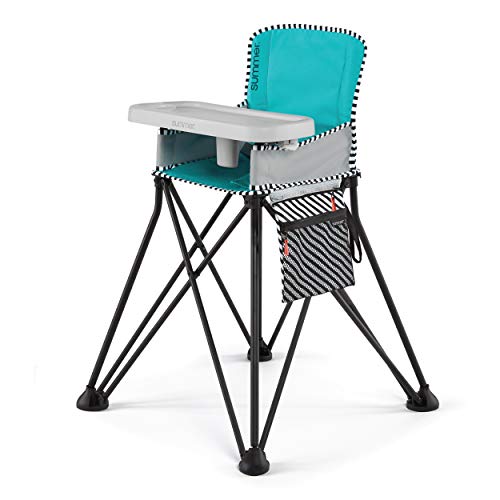
Here is a feeding chair perfect for feeding your little one inside and outside.
The pop-and-fold design sets up in seconds for your convenience.
The high chair comes with a carry bag to make it easy for you to take on all your adventures.
The small size allows you to bring your baby close to your table.
The dishwasher-safe tray and machine-washable fabric make cleanup simple.
Use the helpful wet/dry bag to carry snacks, utensils, and wipes with ease.
There is no assembly required with this chair. It includes a three-point harness and comes with a 90-day limited warranty.
3 In 1 TOBBI Baby High Chair - Best for Multi-Positioning
3. 3-in-1 Tobbi Baby Chair
It is easy to use and convert from a highchair to a booster seat, making it ideal for any stage of your child's development.
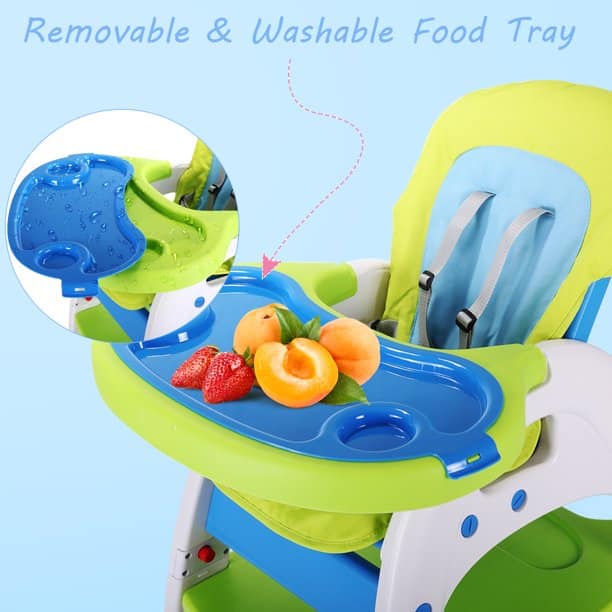
The TOBBI Multi-functional Convertible baby highchair is the perfect solution for parents with small children.
Easily store it in your trunk for use out on the road.
With three different reclining positions and a 5-point safety restraint system, your baby can sit on it comfortably at any angle they like.
With this chair, you won't need to fret that it will be too tiny for your toddler once they start growing.
When you have the room at a rest stop, for instance, you can set your baby up with the table and chair next to your picnic table.
Your little ones will feel like they have their own space and enjoy the eating experience.
The tray itself includes two cup holders. Its plastic design is smooth and doesn't include any rough edges. The rounded tray will keep your baby safe at all times.
4. Portable Babideal Luna
The wipeable seat cover and removable infant insert make it easy to keep clean, no matter how messy your little one gets.
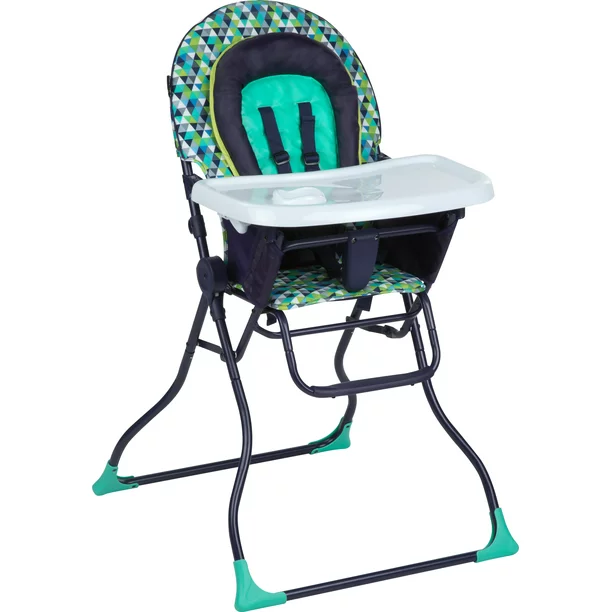
The Babideal Luna highchair is perfect for your growing child.
The chair will remain comfortable for your child at any stage due to the adjustable tray and deluxe pad. The adjustable tray includes three different positions.
The deluxe pad infant insert offers extra room as your baby grows.
The portable chair will help support and protect your child with its 5-pt harness. You can easily store the chair away.
Taking it with you while traveling is a breeze. Fold it up, put it in the car, and remove it when it's time to stop for the next feeding session.
You can get a one-year limited warranty and choose between black and white checkers.
5. Maxi-Cosi Minla Foldable Chair
The handy Minla can act as an infant seat with nine heights, four tray positions, and five recline positions.
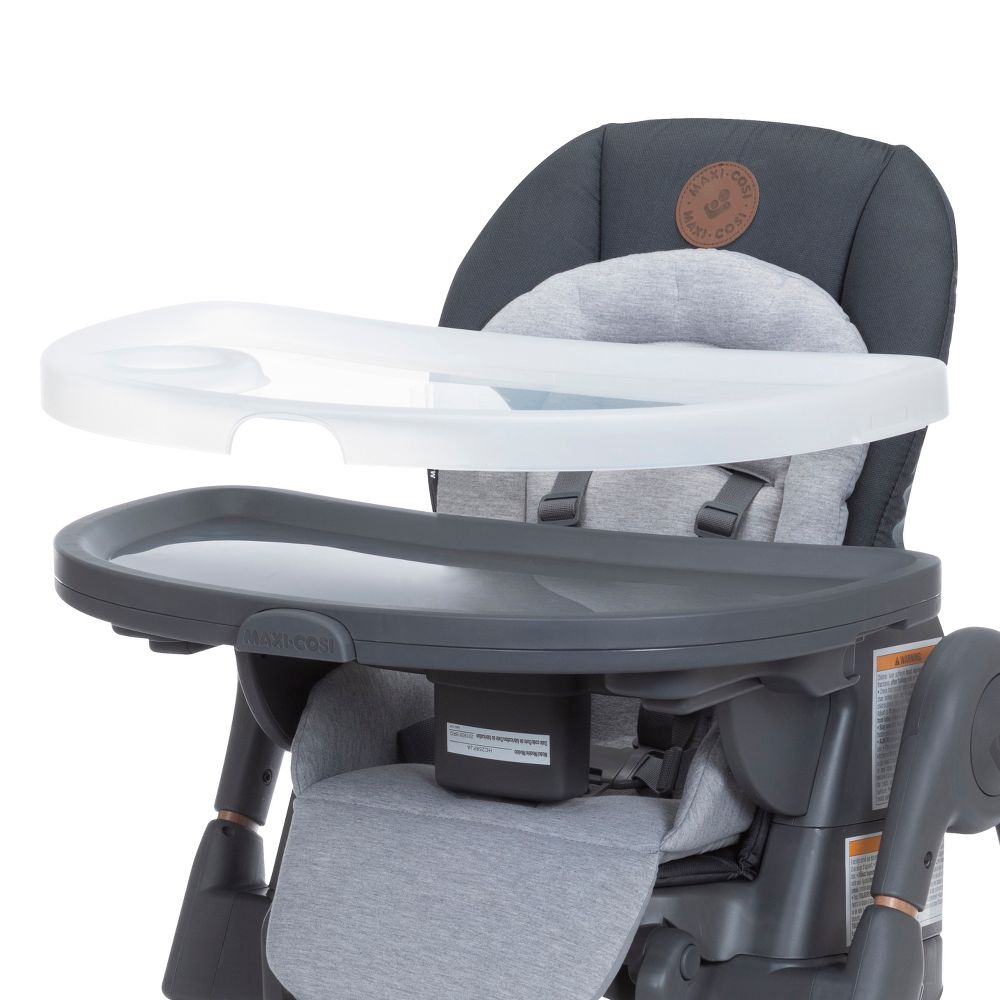
Having your child with you while you travel creates opportunities for connection and fun limited only by your imagination.
Your baby will be safe and cozy in the snug inlay. When your child gets bigger, put the device into high chair use.
You’ll find that this booster seat and its tray will make mealtimes easier for both of you.
While there's no guarantee that a meal with your baby will remain mess-free, this chair makes it easy when cleanup time comes.
The easy-to-clean seat pad is simple to put in the washing machine or wipe down.
The Minla is a good-looking bag. You might not want to stow it away.
However, you must do so when it's time to get back in the car.
After you're finished using it, the Minla easily folds up for storage so you can get back on the road.
Final Thoughts
Feeding your baby in a car seat can seem tricky, but with the correct information, you can do it safely and effectively.
Bottle feeding is an option for parents traveling or on the go.
There are plenty of quality baby feeding chairs available to make the process easier.
With a little bit of preparation, you can feel confident that you're providing your child with everything they need while out and about.

Growing up I was a carefree male going about life like there was no tomorrow. Naturally, I ‘grew’ up, settled down and started a family.
Going from an independent carefree male to a family man was somewhat of a U-turn and required a lot of learning. Luckily for me, my wife works in education and has always been the shining light always ahead of me on all factors kids related.
Initially, my wife didn’t have a driving license (luckily this has now changed and it does make life easier), and all things car related were my task. Child locks were the obvious starting point which lead me down a rabbit hole.
So far we have personally tested dozens of convertible car seats and have owned five despite neither of our kids having reached the age of 5! Simply put, a car seat can be great on paper, work great on trying out but can fail on you in real life.
This is why I have put together this website – to help inform and educate you!
Of course, as I mentioned above, at the end of the day your experience will be the best test so I’d love to hear your experiences and feedback in the comments.
To contact me personally, please do so through my contact page.
I look forward to hearing from you!
Peter
P.S. If you click a link on my site and end up buying a car seat on Amazon, I’ll get paid a small commission (or as the Amazon lawyers put it: “As an Amazon Associate I earn from qualifying purchases”)
Leave a Reply